 Save to Pinterest
 My first encounter with koshari happened on a crowded Cairo street corner at dusk, the smell of fried onions mixing with cumin and tomatoes so thick you could almost taste it before eating. A vendor assembled the dish with such casual precision—rice, lentils, pasta layered like edible architecture—that I knew immediately this wasn't just street food, it was strategy. Years later, standing in my own kitchen on a day when nothing felt quite right, I made it without thinking much, and suddenly the chaos sorted itself into something warm and deliberate. That's when koshari became my answer to needing comfort that actually fills you up.
I served this to a group of friends who'd been living on takeout all semester, and watching them stop talking mid-conversation to really taste it felt like a small victory. One of them asked for seconds before finishing firsts, and kept adding more of that garlicky vinegar until the bowl was half sauce. It became the dish I made whenever someone needed feeding, not just because it was good but because it somehow made people slow down.
Ingredients
- Medium-grain rice, 1 cup rinsed: Medium-grain holds its texture without turning mushy, and rinsing removes excess starch so you get separate, tender grains rather than a sticky mass.
- Brown or green lentils, 1 cup rinsed: These lentils keep their shape through cooking unlike red lentils, and they add earthiness that grounds the whole dish.
- Small elbow macaroni or ditalini pasta, 1 cup: The shape matters because small pasta catches the sauce and doesn't feel heavy; larger shapes can overwhelm the balance.
- Water for rice, 2 cups: A 1:2 ratio is forgiving and reliable, though vegetable broth elevates everything if you have it.
- Water for lentils, 3 cups: Lentils need extra liquid to soften without falling apart, and the extra water gets discarded anyway.
- Salt, 1/2 teaspoon divided: Split between components so each layers flavor independently rather than one salty component dominating.
- Olive oil, 2 tablespoons: The foundation of the sauce; don't skimp because it carries the aromatics.
- Large onion finely chopped, 1: Finely chopped means it breaks down into the sauce rather than sitting in chunks, creating a cohesive base.
- Garlic cloves minced, 4: Minced garlic distributes evenly through the sauce, delivering consistent flavor in every spoonful.
- Crushed tomatoes canned, 15 oz: Canned tomatoes are picked at peak ripeness, so they taste more alive than fresh tomatoes most of the year.
- Tomato paste, 1 tablespoon: This concentrated umami deepens the sauce without making it watery or requiring longer cooking.
- Ground cumin, 1 teaspoon: Cumin is the backbone flavor that makes this taste authentically Egyptian; it warms without overpowering.
- Ground coriander, 1/2 teaspoon: Coriander adds subtle sweetness that balances cumin's earthiness and keeps the sauce from tasting one-dimensional.
- Chili flakes, 1/2 teaspoon optional: This is where you control heat; add more if you like fire, leave it out entirely if you prefer pure comfort.
- Sugar, 1 teaspoon: A small amount rounds out acidity from tomatoes and lets spices bloom without tasting sweet.
- Large onions thinly sliced, 2: Thinly sliced onions fry faster and get crispier, and thin ones shatter satisfyingly when you bite down.
- All-purpose flour, 1/2 cup: Flour helps onions crisp up and absorb oil, though you can skip it if you're okay with softer, greasier fried onions.
- Vegetable oil for frying: Use an oil with a high smoke point so it gets hot enough to crisp onions without burning.
- White vinegar, 1/4 cup: The sharp hit cuts through richness and wakes up your palate; this is optional but changes everything.
- Garlic cloves minced for vinegar, 2: Raw garlic in vinegar becomes pungent and bright, a flavor punch that cheap vinegars alone can't deliver.
Tired of Takeout? 🥡
Get 10 meals you can make faster than delivery arrives. Seriously.
One email. No spam. Unsubscribe anytime.
Instructions
- Simmer the lentils until tender:
- Add lentils to cold water, bring to a boil, then drop the heat and let them bubble gently for 20 to 25 minutes until they're soft enough to bite through but still holding their shape. You'll know they're ready when a grain splits easily but doesn't crumble.
- Cook rice until fluffy:
- Combine rinsed rice with 2 cups water and salt, bring to a boil, then cover tightly and reduce heat to the lowest setting for 15 to 18 minutes. Let it sit covered for 5 minutes after turning off the heat so the grains finish steaming.
- Boil pasta al dente:
- Cook pasta in salted boiling water until it's tender but still has a slight bite, usually 2 to 3 minutes less than the package suggests. Taste it because overcooked pasta gets mushy and disappears into the layers.
- Build the tomato sauce with patience:
- Heat oil, add onions, and let them turn translucent and slightly golden—this takes 5 minutes and matters because it sweetens the base. Add garlic, stir for 30 seconds until fragrant, then add tomatoes, paste, and spices, and let it bubble uncovered for 15 to 20 minutes, stirring now and then, until the sauce darkens and thickens enough that a spoon dragged through it leaves a brief trail.
- Fry onions until golden and crispy:
- Toss sliced onions with flour and salt, then fry in batches in hot oil—don't overcrowd or they steam instead of crisping. They're done when golden brown and making crackling sounds, usually 5 to 7 minutes per batch, and they'll crisp up even more as they cool on paper towels.
- Prepare the optional garlic vinegar:
- Mix vinegar, minced raw garlic, and chili flakes in a small bowl and let it sit for 10 minutes so the flavors marry and the raw edge softens slightly. This step is optional but it's the difference between a good bowl and one you'll crave again.
- Layer and serve with intention:
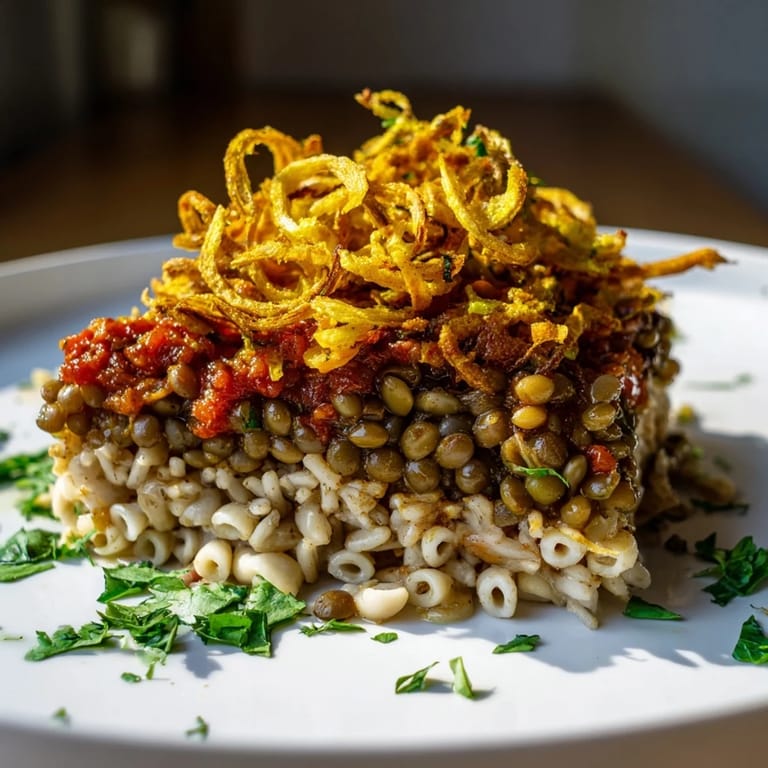
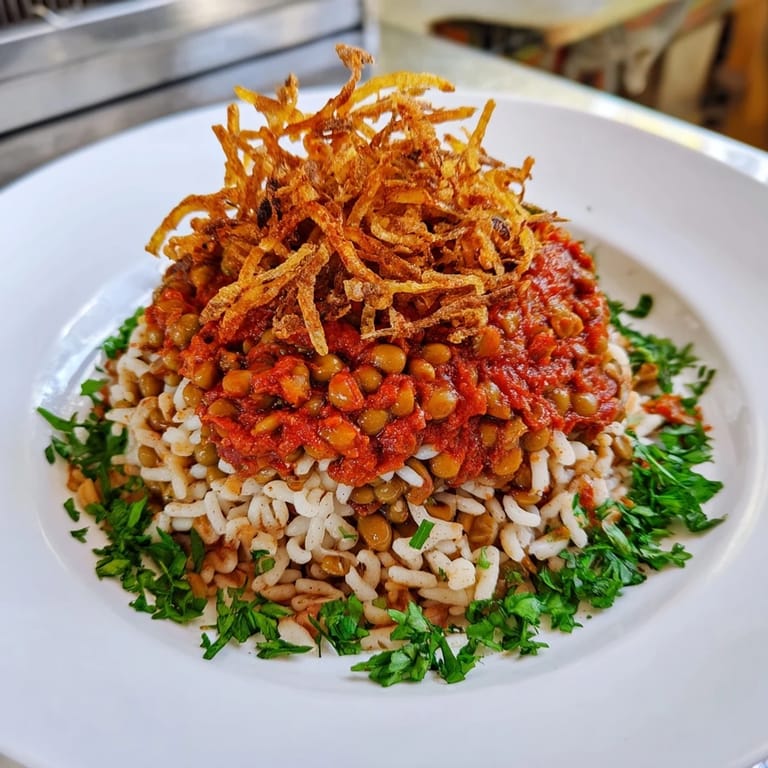
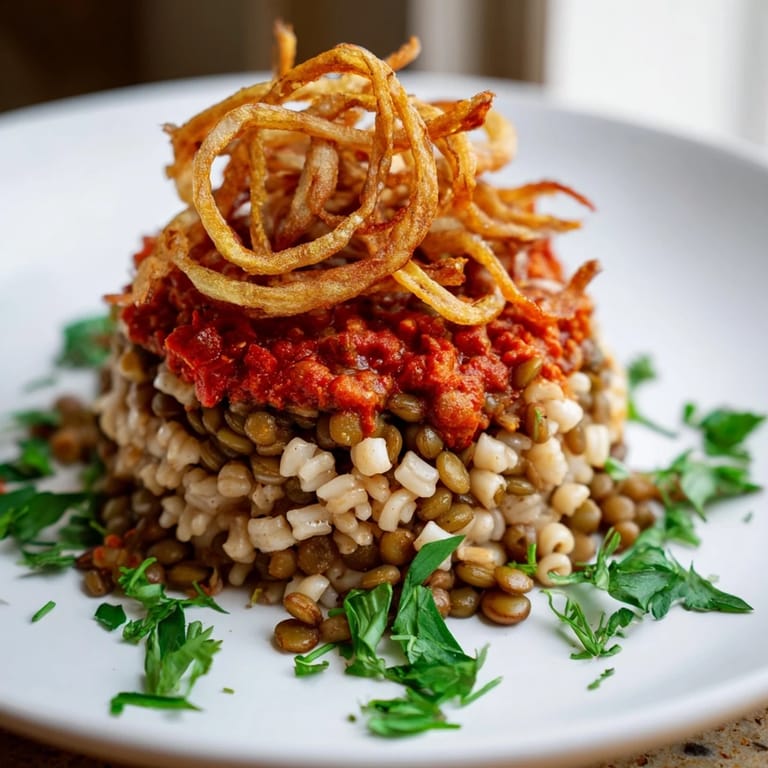
- In a bowl or on a platter, build in layers—rice, lentils, pasta—then spoon sauce over generously. Top with crispy onions so they stay crunchy and drizzle with garlic vinegar if using, and finish with a scatter of parsley if you have it. Serve hot.
 Save to Pinterest
 There's a moment when you've layered everything and added the sauce and those crispy onions, and suddenly it stops being separate ingredients and becomes something whole. I realized koshari isn't really about the individual components matching up—it's about the moment they stop being optional to each other and become essential.
The Spice Story
The first time I made this for someone who couldn't handle heat, I left out the chili flakes entirely and wondered if it would taste flat. It didn't—cumin and coriander are warm and welcoming without burning, and they carry enough complexity that you don't miss the fire. The chili flakes are there if you want them, but they're not what makes this dish sing. If you do add them, start with less than you think you need because the sauce keeps sitting on your tongue longer than the raw spice does.
Making It Your Own
The beauty of koshari is that once you understand the formula—grains, legumes, pasta, sauce, crunch—you can adjust almost endlessly. Some people use vermicelli instead of macaroni because it feels lighter and more delicate. Others skip the vinegar and add more crispy onions instead, leaning entirely into savory richness. I've made it with chickpeas instead of lentils when that's what I had, and it works just as well if you cook them a few minutes longer.
Timing and Prep
The whole dish takes about an hour and ten minutes, but most of that is gentle simmering while you're free to do other things. I usually start the lentils first since they take longest, then begin the rice when the lentils are halfway through. The pasta cooks last, right before assembly, so it's still warm. The sauce can bubble away peacefully while you slice onions and get everything organized, which means by the time you're ready to fry those onions and assemble, most of your work is actually done.
- Start with lentils since they take the longest and can rest happily while other components cook.
- The sauce actually gets better if you make it 20 or 30 minutes ahead and let the spices settle into it.
- Fry your onions last so they stay crispy—fried onions made hours ahead get soft and disappointing.
 Save to Pinterest
 Koshari is the kind of dish that tastes better when you're feeding people you care about, and even better when they come back asking for it again. It's not fancy or difficult, just honest and full.
Common Recipe Questions
- → What grains and legumes are used in Koshari?
The dish features medium-grain rice, brown or green lentils, and small elbow macaroni or ditalini pasta, creating a wholesome mix.
- → How is the spiced tomato sauce prepared?
The sauce is made by sautéing onions and garlic, then simmering crushed tomatoes with tomato paste, cumin, coriander, chili flakes, and sugar to develop rich flavors.
- → What gives Koshari its signature crunch?
Crispy fried onions, coated lightly in flour and fried until golden brown, provide a delicious crunchy topping.
- → Can the textures in Koshari be adjusted?
Yes, each component should be cooked just right: lentils tender, rice fluffy, pasta al dente, and onions crisp to balance textures.
- → Are there any optional garnishes to enhance flavor?
A garlic vinegar dressing with chili flakes and fresh parsley adds bright acidity and herbal notes to finish the layers.