 Save to Pinterest
 The first time I made crispy rice salmon stacks, I wasn't even planning to. I had leftover sushi rice from a failed nigiri attempt, some gorgeous sushi-grade salmon my fishmonger had just trimmed, and an avocado that was perfectly ripe that exact moment. Instead of starting over with something safe, I thought: what if I made the rice crispy? That little spark of improvisation led to something I've made at least once a week since, usually when I want to impress someone without spending hours in the kitchen.
I remember serving these at a dinner party last summer when a friend mentioned she'd never had anything with raw salmon before—she was nervous but curious. Watching her bite into one and immediately ask for the recipe was one of those quiet kitchen victories. Now she makes them for her own guests, and I like to think I accidentally started a chain reaction of people discovering they actually love sushi-inspired food.
Ingredients
- Sushi rice: This is your foundation, and rinsing it thoroughly makes all the difference—it removes the starch and prevents gumminess when you fry it later.
- Rice vinegar, sugar, and salt: These season the rice and give it that subtle tang that makes every bite feel intentional rather than plain.
- Sushi-grade salmon: The finely diced texture matters here; it absorbs the sesame oil and soy sauce while staying tender.
- Sesame oil and sriracha: Just small amounts go a long way—they're confidence builders that make the salmon taste like it came from somewhere sophisticated.
- Avocado: Pick one that yields slightly to pressure but doesn't feel mushy; you want it to still have personality when you slice it.
- Vegetable oil for frying: Keep it hot and neutral-flavored so the rice crisps rather than absorbs oil.
- Sesame seeds and nori: These are your final flourish—they add visual drama and a whisper of umami that ties everything together.
Tired of Takeout? 🥡
Get 10 meals you can make faster than delivery arrives. Seriously.
One email. No spam. Unsubscribe anytime.
Instructions
- Rinse and cook the rice:
- Rinse your rice in a fine-mesh strainer under cold running water, stirring gently with your fingers until the water runs almost clear—this step prevents the finished rice from turning into a brick. Cook it with the measured water, then let it sit covered for those final 10 minutes; that resting time is when the grains finish absorbing moisture and become fully tender.
- Season while warm:
- Fold the vinegar mixture into the rice while it's still warm so the flavors absorb rather than just cling to the surface. This is where patience helps—use a gentle folding motion rather than stirring, which breaks the grains.
- Press and chill:
- Pressing the rice into an even layer and chilling it helps it hold together when you cut and fry it later. Think of this step as building a foundation.
- Prepare the salmon mixture:
- Combine your salmon with the seasonings, but don't over-mix; you're coating it gently, not mashing it into a paste. The lime juice brightens everything and prevents the salmon from tasting one-note.
- Make the spicy mayo:
- Whisking sriracha into mayo seems simple, but this sauce is the element that ties all the flavors together into something cohesive.
- Fry the rice squares:
- Cut the chilled rice into neat squares and fry them at medium-high heat until the edges turn golden and the surface crackles slightly—you'll hear it start to sound crispy. Flip once to crisp the other side, then drain on paper towels so they stay dry.
- Assemble and serve:
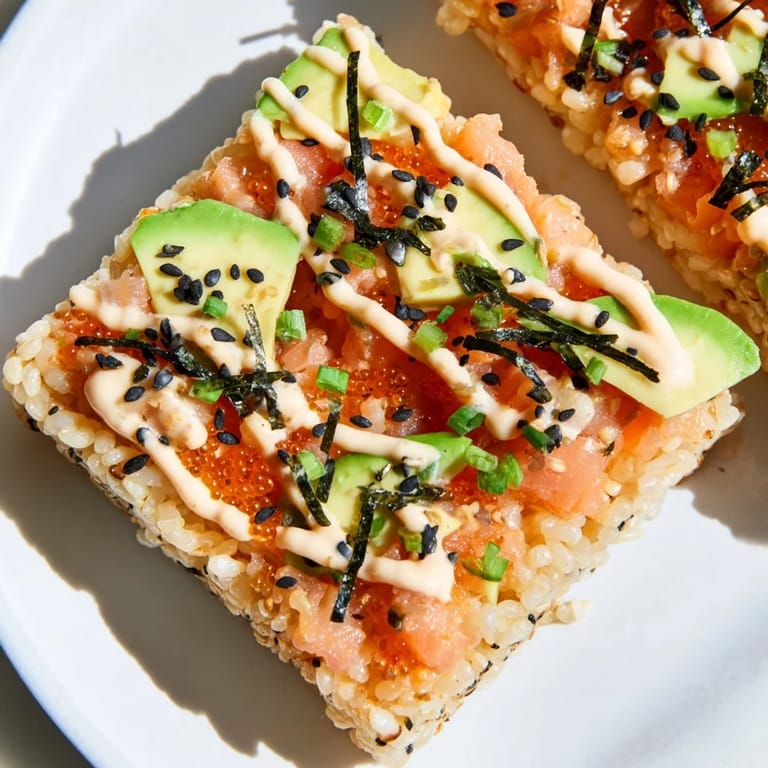
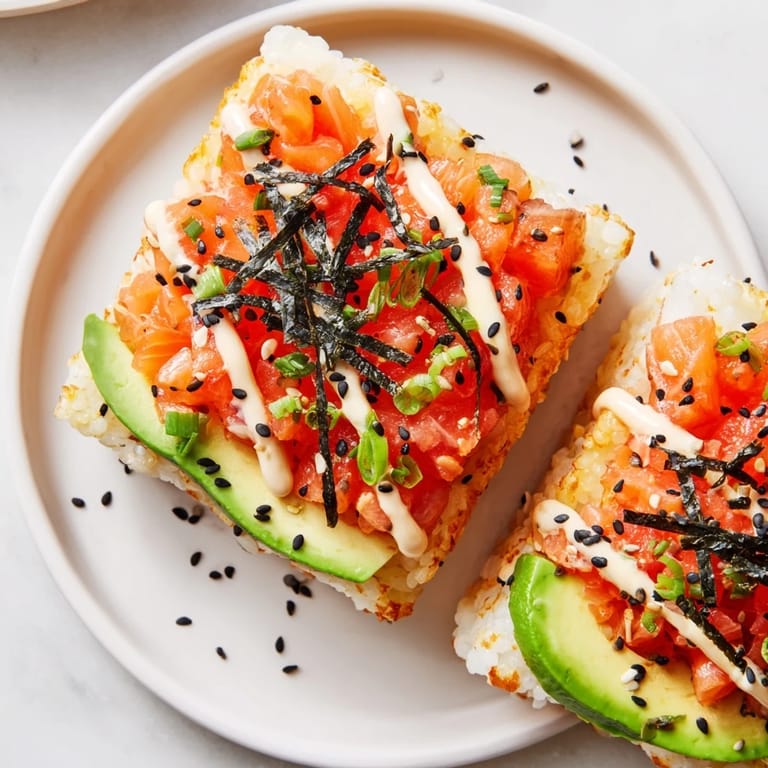
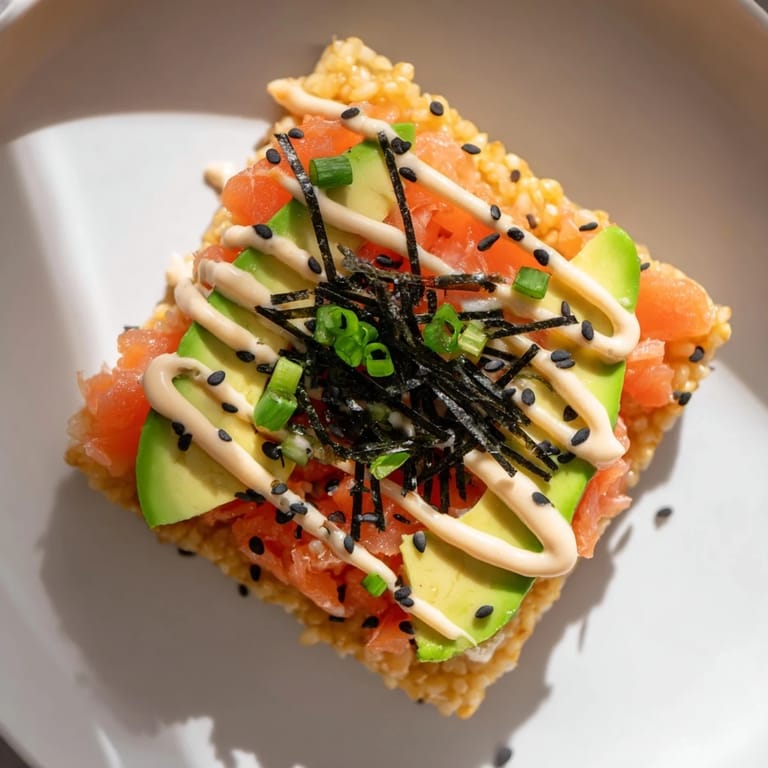
- Layer each rice square with avocado, then salmon, then a small drizzle of spicy mayo, finishing with sesame seeds and any nori you're using. Serve immediately while the rice is still warm and crunchy, before it has a chance to soften.
 Save to Pinterest
 There's something genuinely magical about the moment when a crispy rice square hits a hot skillet and you hear that immediate sizzle—it's a small sound, but it signals that something good is happening. That sensory promise is part of why I keep coming back to this dish.
Why Texture Matters Here
The entire appeal of this dish hinges on contrast—the crispness of the fried rice against the silky salmon and creamy avocado. If your rice isn't crispy enough, it just tastes like a sushi roll pressed into a square, and if you overcook it, the edges burn and taste bitter. The sweet spot is when it's golden, crunchy, and still has a soft interior just beneath the surface.
Timing Your Assembly
This is one of those dishes where assembly is everything. The fried rice squares start to soften within a few minutes, so you want to top them just before serving, not half an hour before your guests arrive. It's actually an advantage if you're hosting, since it keeps you in the kitchen for those final moments instead of hovering anxiously over plated food.
Variations and Flexibility
While the foundation of crispy rice and salmon is pretty much perfect as written, this dish welcomes improvisation in ways that feel authentic rather than random. You can swap in cooked salmon if raw fish makes you hesitant, add pickled ginger for brightness, or layer in thin cucumber slices for extra freshness and crunch. The key is not overcomplicating—each addition should have a reason and shouldn't compete with the salmon.
- Smoked salmon works beautifully if you want to skip raw fish; use a lighter hand with soy sauce since smoked salmon already brings salt and depth.
- A tiny drizzle of unagi sauce (Japanese eel sauce) adds umami depth if you want to push things toward restaurant-quality intensity.
- Keep the toppings minimal—too many elements fight for attention instead of supporting the salmon as the star.
 Save to Pinterest
 This is the kind of dish that teaches you something every time you make it, whether it's about the behavior of fried rice or the importance of good ingredients. Once you understand how it works, you'll find yourself making it for people who think they don't like seafood, and watching their minds change.
Common Recipe Questions
- → How do I achieve crispy rice squares?
Cook sushi rice, let it cool, then press into a pan and chill. Cut into squares and fry in hot vegetable oil until golden and crispy on both sides.
- → Can I use cooked salmon instead of raw?
Yes, canned or cooked salmon can substitute raw. Simply mix with the seasoning ingredients for a similar flavor profile.
- → What sauces complement this dish?
Spicy mayo made from mayonnaise and sriracha pairs well, along with sesame seeds and thin nori strips for added texture and flavor.
- → How should the rice be seasoned?
Mix rice vinegar, sugar, and salt into the cooked sushi rice to add subtle tanginess and sweetness, enhancing its flavor before frying.
- → What sides work well with this dish?
Pickled ginger, thin cucumber slices, or a crisp white wine or chilled sake complement the layers beautifully.