 Save to Pinterest
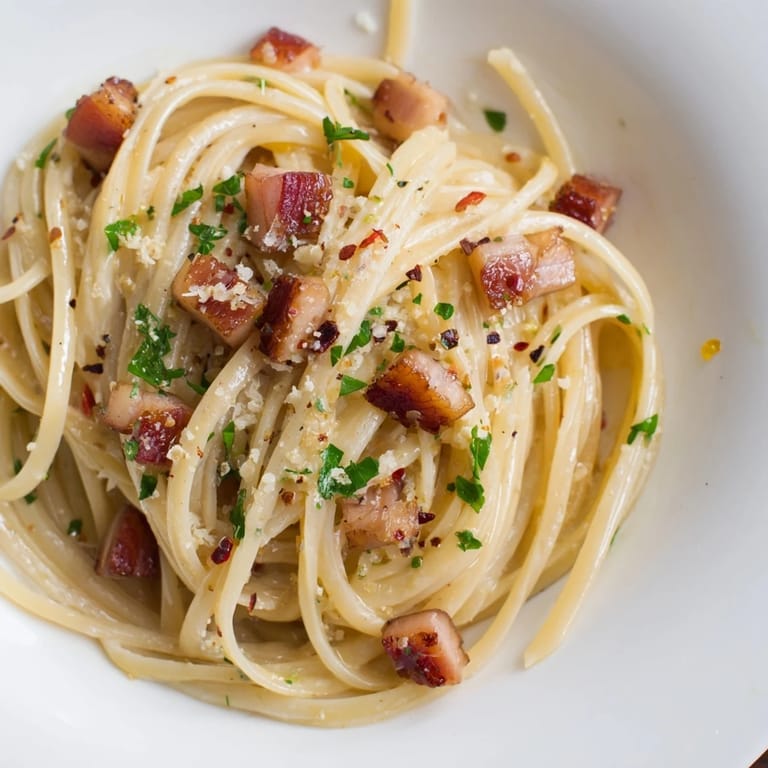
 There's a Tuesday evening I still think about—I'd gotten home late, hungry and tired, with nothing but pasta, bacon, and garlic in the kitchen. No cream in sight, but somehow that's when this dish clicked for me. That first plate of silky, crispy-edged linguine taught me that the most elegant sauces sometimes come from restraint, not richness. Now whenever I make it, I'm reminded that the best meals often happen when you stop overthinking and start with what you have.
I made this for my sister once when she was skeptical about pasta without cream, and watching her face change on that first bite was everything. She kept twirling her fork and asking how it could be so luxurious with just water and Parmesan. That's when I realized this dish isn't just food—it's proof that simple ingredients can surprise you if you treat them with respect.
Ingredients
- Linguine (400 g): Thin, delicate strands catch the sauce better than thicker pastas; cook it to al dente so each bite has just a whisper of resistance.
- Bacon (200 g, diced): The soul of this dish—render it slowly until the edges are crisp and the fat turns translucent, because that's where the flavor lives.
- Olive oil (2 tbsp): Use decent quality here, since you're not masking it with cream; it becomes part of the sauce.
- Garlic (3 cloves, finely chopped): A minute over low heat is all it needs—burnt garlic will haunt your entire dish.
- Black pepper (1/2 tsp freshly ground): Fresh grinding matters; pre-ground loses its bite by the time you need it.
- Red pepper flakes (1/4 tsp, optional): A gentle heat that emerges slowly, not a aggressive spice.
- Pasta cooking water (1/2 cup reserved): This starch-laden liquid is your secret weapon—it transforms into a coating that clings to every strand.
- Parmesan cheese (40 g grated): Adds richness and helps emulsify the sauce; grate it fresh if you can.
- Fresh parsley (2 tbsp chopped): A bright finish that lifts the whole dish from heavy to alive.
- Lemon zest (optional): The surprise that makes people ask what you did differently.
Tired of Takeout? 🥡
Get 10 meals you can make faster than delivery arrives. Seriously.
One email. No spam. Unsubscribe anytime.
Instructions
- Get Your Water Ready:
- Fill a large pot with salted water—it should taste like the sea, not subtle. Bring it to a rolling boil where you can hear it before you see it.
- Cook the Linguine:
- Drop in the pasta and set a timer for whatever the box says, minus a minute. You want it to bend slightly when you bite but still have that subtle resistance that means it'll keep texture when tossed with sauce.
- Render the Bacon:
- While pasta bubbles away, heat olive oil in a large skillet over medium heat and add your diced bacon. Let it sizzle and crackle for 6–8 minutes, stirring occasionally, until the pieces are crisp at the edges and golden.
- Toast the Garlic Gently:
- Lower the heat to medium-low, add your minced garlic and black pepper, and stir constantly for just one minute. The moment it smells incredible and just starts to deepen in color, you're done—this is when you stop, not when it turns brown.
- Bring It Together:
- Drain the linguine, reserving that cloudy pasta water like it's liquid gold. Add the pasta directly to the bacon skillet, pour in a quarter cup of pasta water, and toss until every strand gets coated. If it looks too dry, add more water a splash at a time until you see a glossy, creamy coating forming.
- Finish with Cheese:
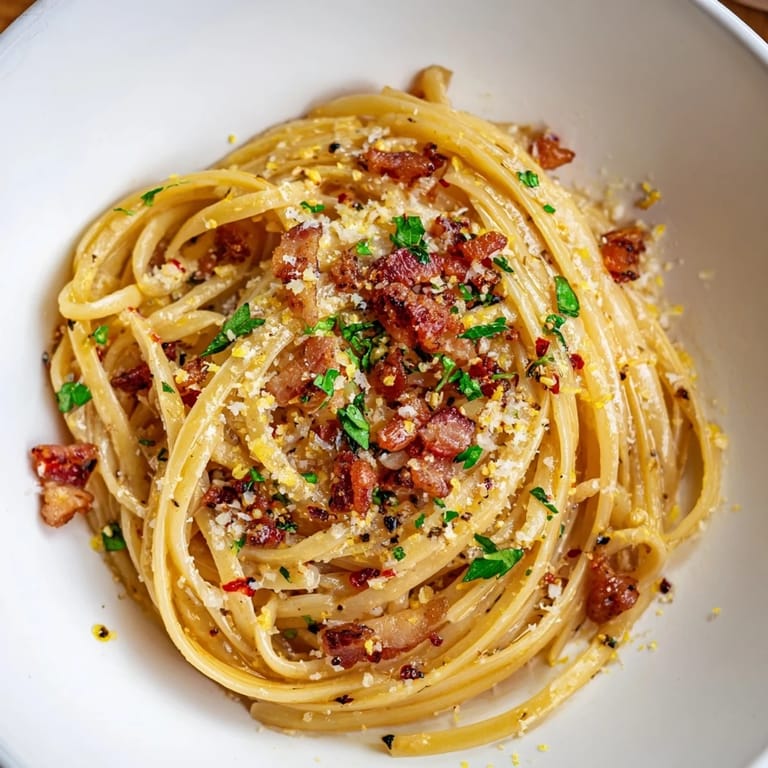
- Pull the skillet off heat, scatter in your grated Parmesan, and toss gently until it melts into the sauce and everything turns silky. Stir in the parsley and lemon zest if using, and serve within seconds.
 Save to Pinterest
 The real magic of this dish is that moment when the pasta water emulsifies and suddenly you're looking at something that tastes like it took hours, when really you've been cooking for less than 20 minutes. It's one of those kitchen moments that reminds you why people fall in love with cooking—not because it's complicated, but because it works.
Why This Becomes a Weeknight Favorite
There's something deeply satisfying about a dish that asks for almost nothing but delivers so much. Bacon linguine lives in that sweet spot where every ingredient earns its place, and the technique is forgiving enough that even if you're tired or distracted, you'll still end up with something delicious. It's the kind of meal that doesn't require special shopping or careful planning—just know you have these basics on hand and you're ready to eat well.
Playing with Variations
Once you understand how this dish works, you can riff on it endlessly. Some nights I'll add a handful of peas or sautéed mushrooms in the last minute for vegetables and texture. Other times I'll swap the bacon for pancetta if I'm feeling fancy, or use turkey bacon if I want something lighter but still want that crispy-edged payoff. The foundation is so solid that variations feel like exploring rather than experimenting.
The Small Details That Matter
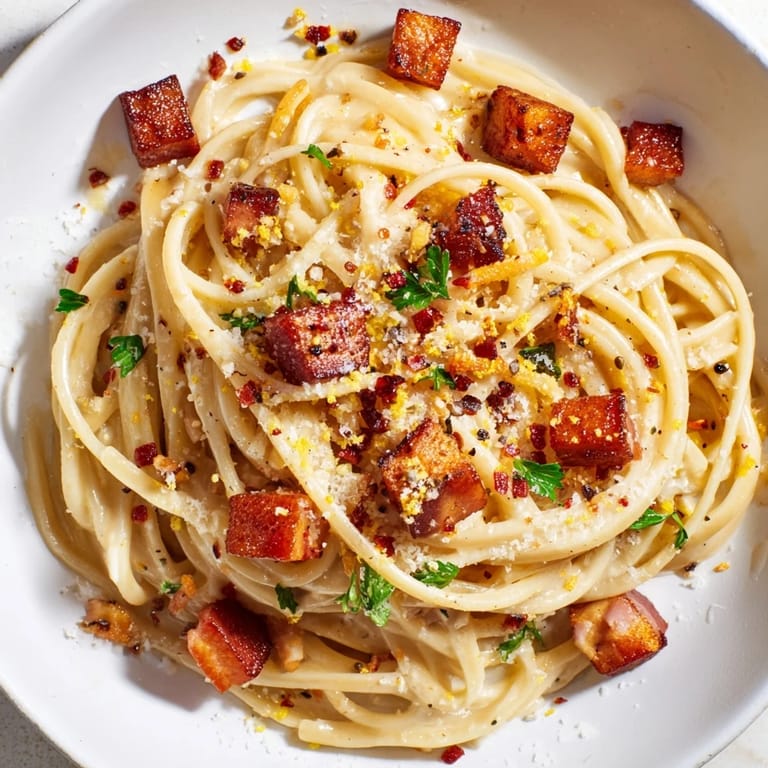
What makes this dish feel restaurant-quality is the combination of contrasts—crispy bacon against tender pasta, the brightness of parsley against rich cheese and fat, the slight heat from cracked pepper against cool lemon zest. Each element does a specific job, and together they create something that feels greater than the sum of its parts. Don't skip the finishing touches even though you'll be hungry; they're what transform dinner into something memorable.
- Always cook pasta to al dente, not soft—it continues to cook slightly when tossed in the hot skillet.
- Taste your pasta water before reserving it; if it's not salty enough, the sauce won't have backbone.
- Serve on warm plates and eat immediately; this dish doesn't wait for anyone.
 Save to Pinterest
 This is the kind of dish that reminds you why cooking matters—not because it's impressive, but because it's honest. Simple, quick, and absolutely worth making again tonight.