 Save to Pinterest
 There's something about the smell of butter and flour coming together that instantly transports me back to my mom's kitchen on lazy Sunday afternoons. She had this old wooden spoon she'd use for the roux, worn smooth from decades of stirring, and I'd watch as she whisked in the milk with such patience, never rushing, never lumpy. Mac and cheese wasn't fancy in our house—it was comfort, reliability, the thing she made when we needed reassurance more than anything else. I've made it hundreds of times since, experimenting with cheese combinations and topping techniques, but that foundational method never changes: butter, flour, milk, cheese, pasta. Pure alchemy.
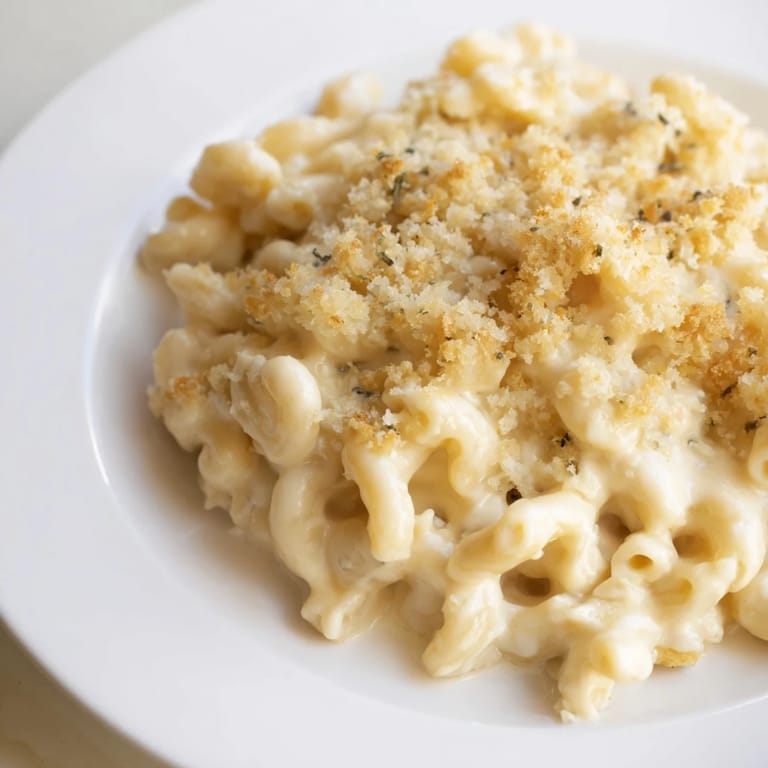
I remember making this for my college roommate's birthday dinner, and I was genuinely nervous because she'd grown up eating gourmet versions at fancy restaurants. I decided to bake it with the panko topping, and when it came out of the oven with that deep golden crust and the cheese sauce still bubbling at the edges, she took one bite and just closed her eyes. She said it tasted like the kind of food that makes you feel less alone, and that's stayed with me ever since.
Ingredients
- Elbow macaroni (350 g): Use whatever pasta shape you love, but elbows really do catch and hold the sauce better than most shapes—I've tested this theory thoroughly.
- Unsalted butter (3 tbsp for sauce, plus 2 tbsp melted for topping): Don't skip the unsalted; it lets you control the salt level and taste the butter itself.
- All-purpose flour (3 tbsp): This thickens the béchamel, so don't reduce it or you'll end up with sauce that's more like soup.
- Whole milk and heavy cream (2 cups milk, 1 cup cream): The combination of both creates silkiness that milk alone can't achieve—the cream is non-negotiable.
- Sharp cheddar cheese (200 g): Sharp means flavor, and you need that bite to stand up to the mild cheeses balancing it out.
- Gruyère or Swiss cheese (75 g): This is the one that adds sophistication; it has a slightly nutty undertone that elevates the whole dish.
- Parmesan cheese (50 g for sauce, 2 tbsp for topping): Finely grated Parmesan dissolves smoothly and adds umami depth.
- Dijon mustard, garlic powder, onion powder, salt, pepper, and cayenne: These aren't additions; they're the secret architecture that makes cheese taste like itself, amplified.
- Panko breadcrumbs (½ cup) and melted butter (2 tbsp): The crunchy top is optional but worth it—it provides textural contrast that makes the whole dish more interesting.
Tired of Takeout? 🥡
Get 10 meals you can make faster than delivery arrives. Seriously.
One email. No spam. Unsubscribe anytime.
Instructions
- Get your oven ready (if baking):
- Preheat to 200°C (400°F) and grease your baking dish lightly so the edges don't stick and harden. A 2-liter dish is the sweet spot for this amount.
- Cook the pasta until it still has backbone:
- Bring salted water to a rolling boil and cook the macaroni about 1–2 minutes under al dente—it will cook more when you bake it or when it sits in the hot sauce. Drain it thoroughly and set aside in a large bowl.
- Build the béchamel, the foundation of everything:
- Melt butter over medium heat, then whisk in flour and stir constantly for 1–2 minutes until it smells toasted and turns a pale golden color. This is the roux, and it's what thickens your sauce—don't brown it or it tastes bitter.
- Slowly add the milk and cream, whisking like your life depends on it:
- Warm milk incorporates more smoothly than cold, so use it if you can. Whisk constantly to avoid lumps, and if any do form, keep whisking or press the sauce through a fine sieve. The sauce should thicken gradually over 4–5 minutes into something that coats the back of a spoon.
- Season and add the flavor makers:
- Reduce heat to low and stir in the mustard, garlic powder, onion powder, salt, pepper, and cayenne. These aren't optional—they brighten the cheese and prevent it from tasting one-dimensional.
- Melt in the cheese, piece by piece:
- Add the cheeses in batches, stirring constantly and letting each batch fully melt before adding more. If you dump them all in at once, they clump together and won't incorporate evenly.
- Combine the pasta and sauce with a gentle hand:
- Fold the cooked macaroni into the cheese sauce until every strand is coated. Don't stir aggressively or the pasta will break.
- Either serve creamy or top and bake:
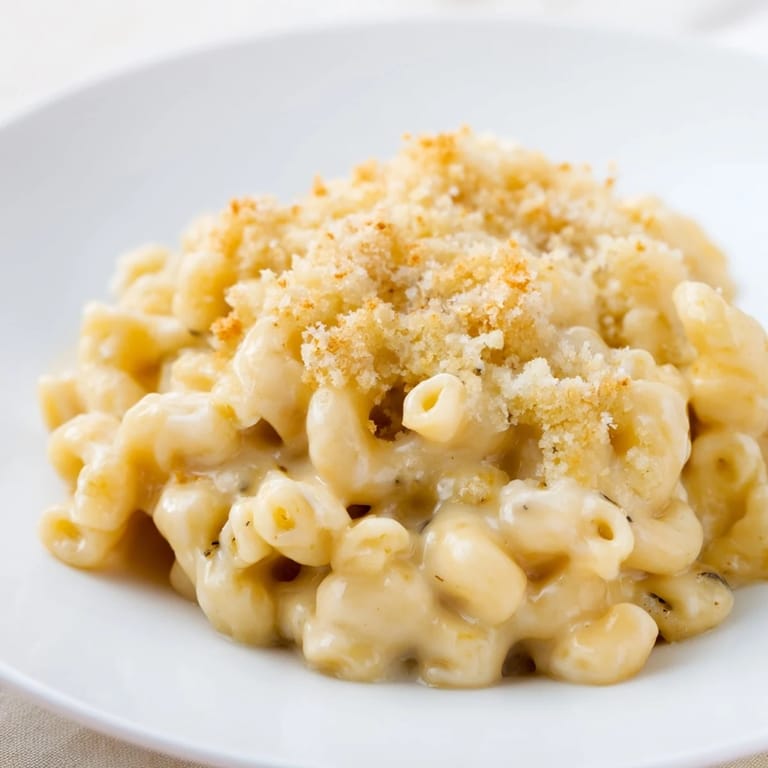
- For stovetop: serve immediately while the sauce is luxuriously liquid. For baked: transfer to your prepared dish, mix the panko with melted butter and Parmesan, sprinkle it evenly over the top, and bake 20–25 minutes until the crust is golden and the edges bubble.
- Rest before serving (if baked):
- Let it sit 5 minutes out of the oven so the sauce sets slightly and won't run across the plate.
 Save to Pinterest
 My partner was going through a rough patch a few years ago, and I made this one Tuesday evening without saying anything special about it. We sat at the kitchen counter and ate straight from the baking dish while talking about nothing in particular, and by the time it was half gone, he looked different—calmer, more present. Food doesn't fix hard things, but sometimes it creates just enough comfort to let you breathe.
The Stovetop Versus Baked Decision
Both versions are legitimate, but they serve different purposes in my kitchen. Stovetop mac and cheese is pure luxury—silky, rich, and ready to eat in 20 minutes flat. There's something deeply satisfying about serving it directly from the pot, sauce still gently steaming. Baked mac and cheese, though, is the showstopper: it develops a golden crust that shatters when you cut into it, revealing the creamy depths below. I make the stovetop version on busy weeknights when I just need comfort, and the baked version when I want to impress someone or when I'm cooking for a gathering. The sauce is identical; the experience is entirely different.
Cheese Selection: The Secret Architecture
The three-cheese approach isn't overcomplicated—it's strategic. Sharp cheddar brings aggressive flavor and good melting properties, but used alone it can turn one-note. Gruyère adds sophistication with a subtle nuttiness that makes the dish feel less like a childhood favorite and more like something you'd eat at a nice restaurant. Parmesan adds savory depth and helps the sauce firm up slightly. I've watched people substitute or skip cheeses thinking they'd save money, and the result is always flat and disappointing. The combination of sharp, creamy, and hard cheeses creates complexity that no single cheese can replicate. If you want a milder flavor, swap the sharp cheddar for mild, or replace the Gruyère with a softer cheese like Monterey Jack, but don't reduce the number of cheeses.
Beyond the Basic: Variations That Work
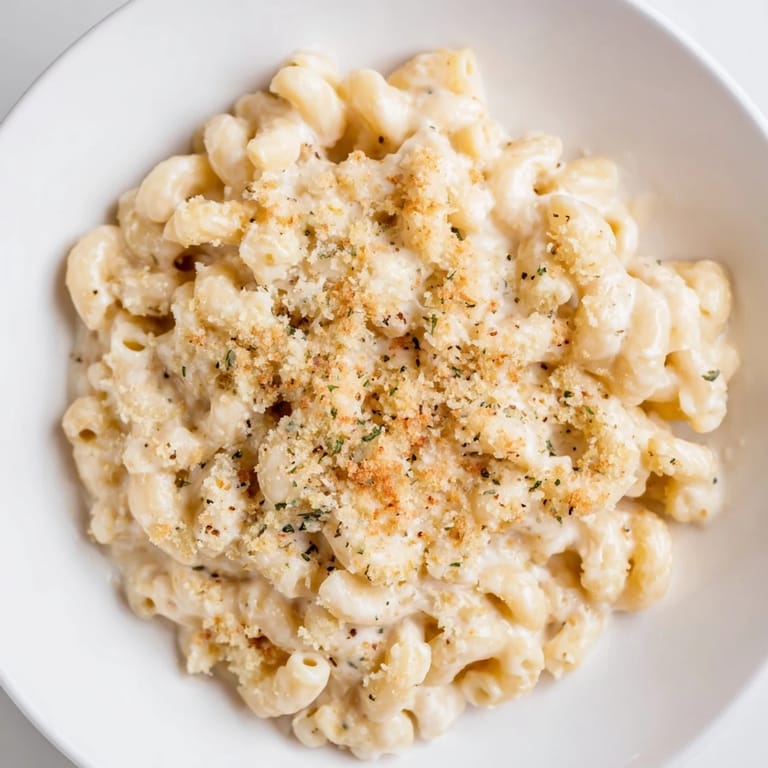
Once you understand the formula, you can bend it to your taste without breaking it. Crispy bacon stirred into the sauce adds smokiness and textural contrast. Sautéed mushrooms contribute earthiness, especially cremini or shiitake, which have deeper flavor than white buttons. Blanched broccoli florets make it feel like a more complete meal without overwhelming the dish. Even a small amount of sautéed caramelized onion transforms it into something more complex and sophisticated. The key is not to load it so full of additions that the cheese sauce becomes secondary—it should always be the star.
- Add cooked bacon or pancetta for smokiness that cuts through the richness.
- Stir in sautéed mushrooms or caramelized onions for depth without overpowering.
- Mix in blanched broccoli, peas, or roasted vegetables to make it feel like a complete dinner.
 Save to Pinterest
 Mac and cheese is one of those rare dishes that feels both deeply personal and universally understood. Make it for people you love, and they'll remember it.
Common Recipe Questions
- → How do I achieve the perfect creamy texture?
Slowly whisking warm milk and cream into the roux helps create a smooth béchamel base; melting cheeses gradually ensures a velvety sauce.
- → Can I prepare this dish without baking?
Yes, serving immediately after folding in the sauce and pasta results in a luxuriously creamy stovetop version without a crispy crust.
- → What cheeses best balance the flavor?
Sharp cheddar provides boldness, while Gruyère adds nuttiness and Parmesan contributes savory depth for a harmonious blend.
- → How to add extra flavor variations?
Incorporate cooked bacon, sautéed mushrooms, or blanched broccoli to introduce new textures and enhance taste complexity.
- → Is it necessary to pre-cook the macaroni slightly less than package instructions?
Cooking the pasta just al dente avoids over-softening during combining and baking, ensuring a pleasant firmness in the final dish.