 Save to Pinterest
 There's something about the smell of meat sauce simmering that makes a kitchen feel like home, even if it's your first time making lasagna. My sister called me one Sunday afternoon asking if I could bring dinner to her place, and without thinking twice I said yes—then immediately panicked because I'd never actually assembled a full lasagna before. But standing there with my hands in the ricotta mixture, layering noodles like I was building something that mattered, I realized this dish wasn't complicated, just generous. It's the kind of food that shows up when you want to feed people well.
I still remember my dad taking that first bite at my sister's dinner table, the way he went quiet for a second before asking for seconds. There were eight of us crowded around, and this lasagna was the thing we all kept reaching for. That's when I understood—this isn't just a recipe, it's a reason to gather people around a table.
Ingredients
- Ground beef (1 lb): The backbone of your sauce—use freshly ground if you can, it browns better and tastes cleaner than the pre-packaged stuff.
- Italian sausage (1/2 lb, casings removed): This adds depth and a subtle fennel note that makes people wonder what your secret is.
- Onion and garlic (1 medium onion, 3 cloves): Chop the onion fine so it practically melts into the sauce, and don't skip the garlic—it's the foundation of everything that comes next.
- Crushed tomatoes and tomato sauce (28 oz and 15 oz cans): The combination of both gives you body and brightness; crushed tomatoes alone would be too chunky, sauce alone too thin.
- Tomato paste (2 tbsp): This concentrate is your flavor amplifier, but stir it directly into the hot pan so it caramelizes slightly instead of clumping.
- Dried oregano and basil (1 tsp each): These are Italian essentials, and dried works beautifully here because they'll bloom in the simmering sauce.
- Salt, black pepper, and red pepper flakes (1/2 tsp, 1/2 tsp, 1/4 tsp optional): Start with the salt and pepper listed, then taste near the end because you might want to adjust; the red pepper flakes add a whisper of heat if you're into that.
- Ricotta cheese (2 cups): This is what makes lasagna creamy and distinct from other tomato-based pastas; don't use cottage cheese as a substitute no matter what anyone tells you.
- Egg (1 large): The binder that keeps your cheese layer from sliding around, so don't skip it.
- Parmesan cheese (1/2 cup, grated): Adds a sharp, salty contrast to the sweet ricotta—buy a wedge and grate it yourself if you have time.
- Fresh or dried parsley (2 tbsp fresh or 1 tbsp dried): A small touch of freshness that rounds out the whole flavor profile.
- Lasagna noodles (12 noodles): No-boil noodles save time and stress; regular noodles work fine too, just cook them one minute shy of tender so they don't turn to mush in the oven.
- Mozzarella cheese (3 cups, shredded): The golden, bubbly top that makes people excited to eat—shred it fresh if you can, as pre-shredded has anti-caking agents that affect texture.
- Olive oil: A good glug for sautéing, nothing fancy needed here.
Tired of Takeout? 🥡
Get 10 meals you can make faster than delivery arrives. Seriously.
One email. No spam. Unsubscribe anytime.
Instructions
- Heat your oven and prepare:
- Preheat to 375°F and lightly grease a 9x13-inch baking dish so nothing sticks when you're pulling it out later. If you're using regular lasagna noodles, get a pot of salted water boiling now.
- Cook the noodles:
- Follow the package timing but pull them out one minute early—they'll finish cooking in the oven. Drain them gently, toss with a tiny bit of oil so they don't clump, and lay them flat on a cutting board.
- Build your flavor base:
- Heat olive oil in a large skillet over medium heat, then add your chopped onion and let it soften for about three minutes until it turns translucent. You'll hear it sizzle and smell that sweet, cooked onion scent that means you're on the right track.
- Add the aromatics:
- Stir in the minced garlic and cook for just one minute—don't walk away because garlic burns fast and bitter garlic ruins everything.
- Brown the meat:
- Crumble in your ground beef and sausage, breaking them up with a wooden spoon as they cook. You want everything browning and separated, not clumpy—this takes about five to seven minutes. If there's a pool of fat at the end, drain some of it off, but don't go overboard because you want flavor.
- Create the sauce:
- Stir in the tomato paste and let it cook for a minute so it caramelizes slightly, then add both cans of tomatoes, the tomato sauce, oregano, basil, salt, pepper, sugar, and red pepper flakes if using. The sugar isn't sweetness—it just balances the acidity of the tomatoes and helps everything taste rounded.
- Simmer and taste:
- Bring the sauce to a gentle simmer and let it bubble away uncovered for fifteen to twenty minutes, stirring now and then. This is when your kitchen will smell absolutely incredible—that's when you know you're winning. Taste it toward the end and adjust the salt if needed.
- Make the cheese mixture:
- While the sauce simmers, combine ricotta, egg, Parmesan, parsley, salt, and pepper in a bowl and mix until smooth and creamy. This is your binding layer, and it should feel almost mousse-like.
- Assemble the lasagna:
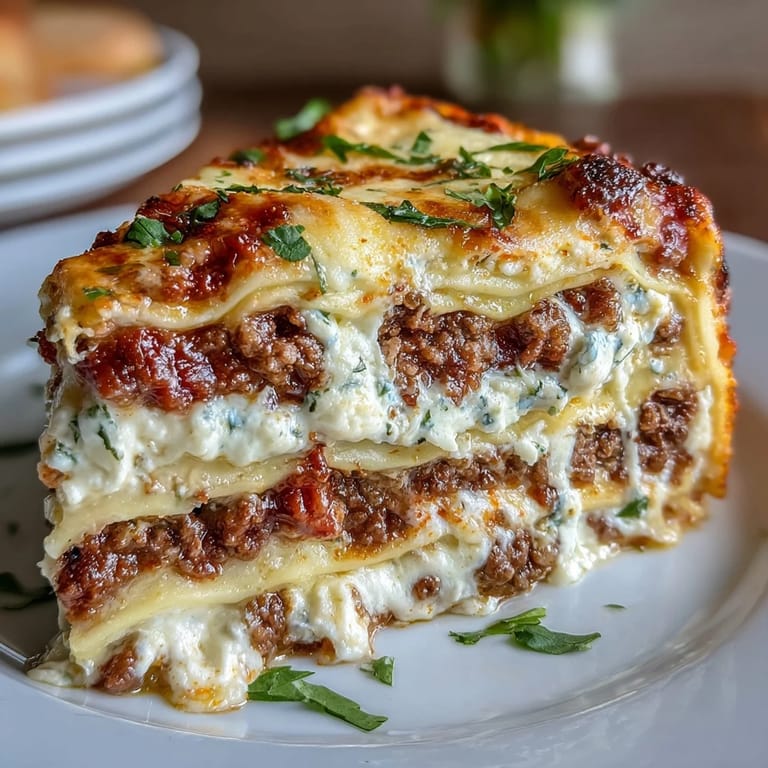
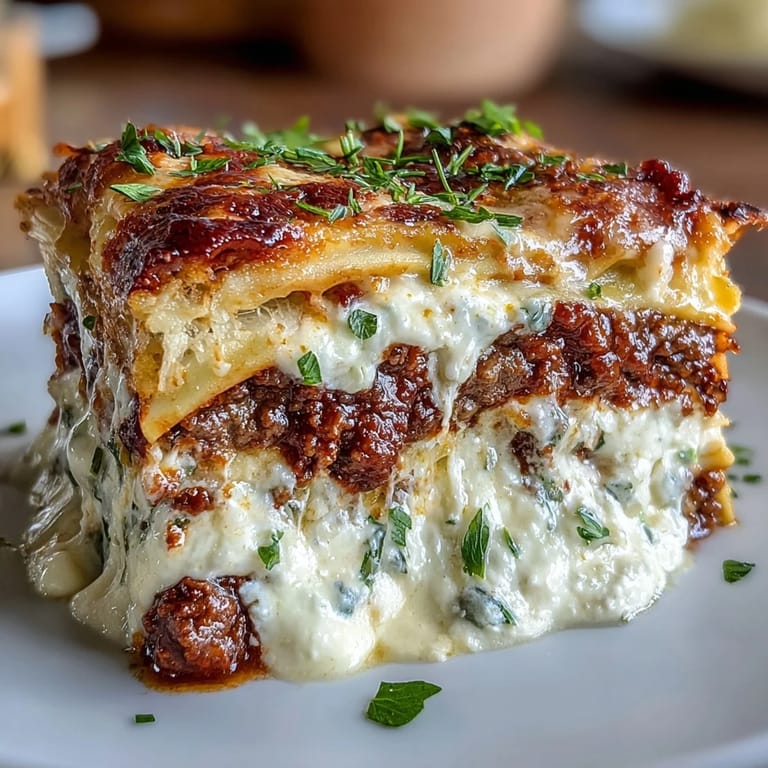
- Spread one cup of meat sauce on the bottom of your baking dish, then lay four noodles over it. Spread one-third of the ricotta mixture over the noodles, top with one cup of sauce, then sprinkle one cup of mozzarella. Repeat this pattern two more times—sauce, noodles, ricotta, sauce, mozzarella—finishing with your remaining sauce and all the remaining mozzarella on top. The key is even layers so every bite has all the components.
- Bake covered, then uncovered:
- Cover the dish tightly with foil and bake for twenty-five minutes so the heat penetrates evenly without browning the cheese too fast. Then remove the foil and bake another twenty minutes until the cheese is bubbling at the edges and golden on top—you want some caramelization on that mozzarella.
- Rest before serving:
- Let the lasagna sit for fifteen minutes out of the oven—I know this is hard, but it lets everything set so your slices stay together instead of sliding all over the plate. Pour yourself a glass of wine while you wait.
 Save to Pinterest
 My nephew, who is honestly the pickiest eater I know, asked for thirds of this lasagna and then wanted to know if we could make it again next Sunday. I've made plenty of impressive dishes that got compliments, but there's something about watching someone you love actually clean their plate that makes you understand why people have been making lasagna for generations.
Why This Becomes a Favorite
Lasagna has this magic quality where it tastes even better the next day because the flavors have time to meld and deepen. I've found that reheating a slice in the oven (not the microwave) brings back that creamy, saucy quality that makes it feel almost fresh. It's one of those rare dishes that actually improves with time, which means you can make it ahead and feel like you've got your life together.
Feeding a Crowd Without Stress
One of my favorite things about lasagna is that you're not scrambling at the last minute—everything comes together before it goes in the oven, and then you just wait. You can prep this in the morning, cover it with foil, and stick it in the fridge until dinner time; just add five to ten minutes to the baking time if it's cold. It's comfort food that actually makes your life easier, not harder.
How to Make It Your Own
The beauty of this lasagna is that it's sturdy enough to handle changes without falling apart. Some people swear by adding a splash of red wine or a pinch of nutmeg to the cheese layer; others layer in sautéed spinach or mushrooms for more vegetables. You can use half ground turkey instead of beef to lighten it up, or go full vegetarian by skipping the meat entirely and loading the sauce with roasted zucchini and mushrooms instead.
- If you want to freeze it, assemble everything but don't bake it, wrap it tightly in plastic wrap and foil, and it'll keep for three months—just thaw it overnight in the fridge before baking.
- Leftovers reheat beautifully either in the oven at 350°F for about twenty minutes covered with foil, or as individual portions in a skillet over medium heat.
- Pair this with a simple green salad and garlic bread, and you've got a complete meal that feels restaurant-quality but entirely homemade.
 Save to Pinterest
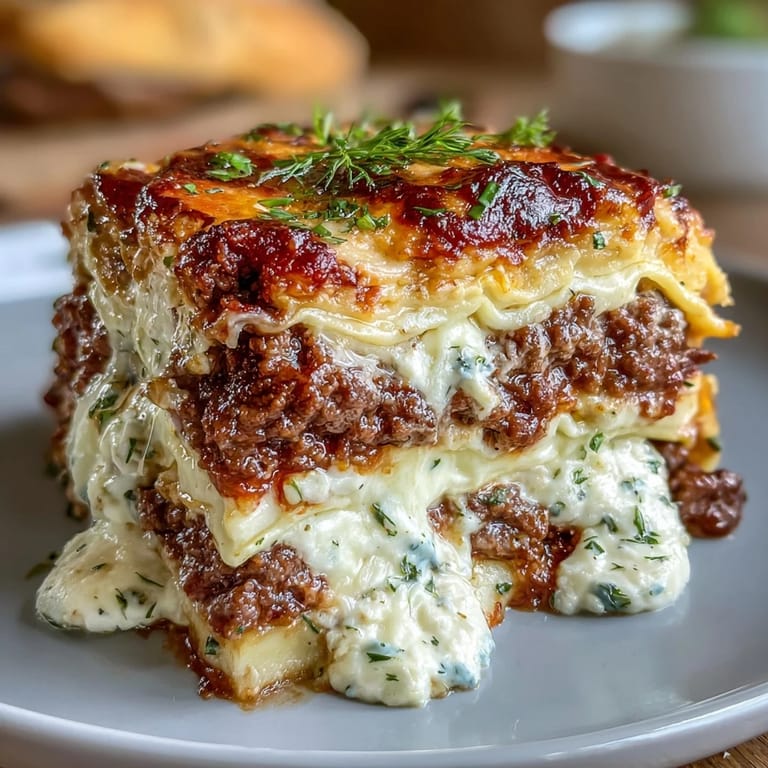
 This lasagna is the kind of dish that reminds you why cooking for people matters—it's not fancy, but it's made with care, and that comes through in every bite. Make it, feed people, and watch their faces light up.
Common Recipe Questions
- → What types of meat are used in the sauce?
Ground beef and Italian sausage provide a robust, savory base for the meat sauce, enhancing its rich flavor.
- → How is the ricotta cheese mixture prepared?
Ricotta is combined with egg, grated Parmesan, parsley, salt, and pepper to create a smooth, creamy filling layer.
- → Can I use no-boil noodles for this dish?
Yes, no-boil lasagna noodles can be used to skip the boiling step and simplify assembly.
- → How long should the lasagna rest after baking?
Allowing the dish to rest for about 15 minutes helps it set and makes slicing easier.
- → Are there vegetarian alternatives suggested?
Omit the meats and add sautéed spinach, zucchini, and mushrooms for a tasty vegetarian option.
- → What wine pairs well with this lasagna?
Robust red wines like Chianti or Sangiovese complement the rich flavors beautifully.