 Save to Pinterest
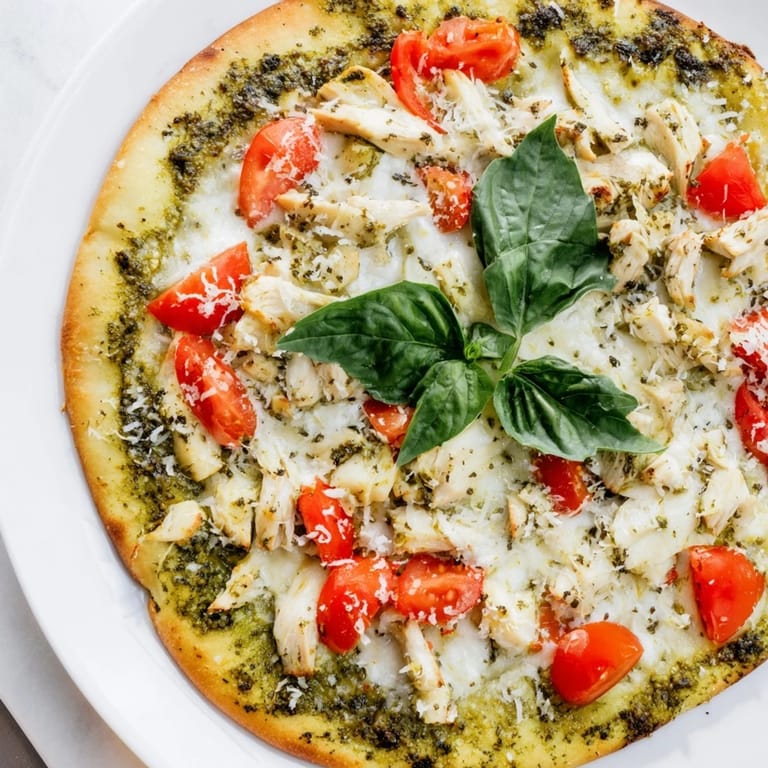
 There's something about the way pesto smells when it hits a hot crust that stops you mid-conversation. I discovered this pizza almost by accident on a Tuesday evening when I had leftover rotisserie chicken and a jar of pesto staring at me from the fridge. My roommate wandered into the kitchen mid-prep, caught that green, garlicky fragrance, and suddenly we were making four pizzas instead of one. It became our default move on lazy weeknights—fast enough for a weeknight dinner, impressive enough to text photos of to friends.
I made this for my sister's book club once, and it was the only thing anyone remembered about the night—which she found hilarious since I'd only brought it as a last-minute side. The combination of fresh basil-forward sauce with the protein of actual chicken meant even the non-pizza people at the table kept reaching for slices. Someone asked if I'd learned to make pizza in Italy, and I had to admit it was born from desperation and whatever was in my crisper drawer.
Ingredients
- Thin pizza crust (12 inches): Store-bought saves time without sacrificing results; I use the quality ones from the bakery section because the difference is real.
- Cooked chicken breast, diced: Use rotisserie if you're short on time—the skin adds richness and the prep is literally zero.
- Olive oil: This quick toss seasons the chicken so it doesn't taste bland against the bold pesto.
- Salt and black pepper: More than you'd think you need; pesto is salty, so the chicken needs its own seasoning moment.
- Basil pesto: Homemade is wonderful if you have an afternoon, but good jarred pesto tastes like you made it and nobody knows otherwise.
- Shredded mozzarella: Don't buy the pre-shredded if you can help it—whole milk, block mozzarella shreds melt into actual creamy pools.
- Ripe tomato, thinly sliced: This is where the season matters; a mealy winter tomato will betray you, so choose carefully or skip it.
- Grated Parmesan: The final layer that makes it feel finished and adds a salty bite that cuts through the richness.
- Fresh basil for garnish: Optional but not really—it's a whisper of flavor that reminds you why this pizza exists.
Tired of Takeout? 🥡
Get 10 meals you can make faster than delivery arrives. Seriously.
One email. No spam. Unsubscribe anytime.
Instructions
- Heat your oven like you mean it:
- Get to 475°F with a pizza stone inside if you have one; the stone is the secret that turns store-bought crust crispy instead of chewy. If you don't have a stone, a baking sheet works, just don't skip preheating because a cold oven is how you end up with soggy centers.
- Wake up the chicken:
- Toss your cooked chicken with olive oil, salt, and pepper in a bowl—this little step means the chicken tastes seasoned instead of like it's just sitting on top of your pizza. A minute of stirring makes all the difference in how the flavors land.
- Position your base:
- Put the crust on your baking sheet or peel, lined with parchment so nothing sticks and cleanup is human-sized. Parchment is not optional if you value your peace of mind.
- Spread the pesto like you're painting:
- :
- Leave a border around the edge so the crust can crisp and brown without burning; I usually do about half an inch. The pesto spreads easier if you use the back of a spoon, and you'll feel less like you're mangling your crust.
- Build your layers:
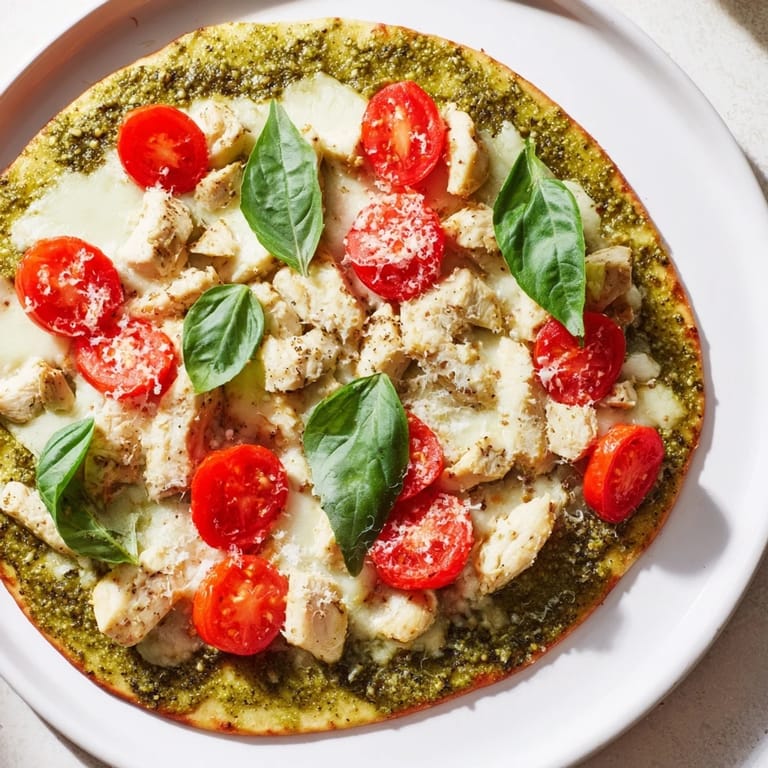
- Chicken first, then mozzarella, then tomato slices, then Parmesan on top so it gets a little golden. This order keeps everything in place and makes sure the flavors layer instead of blur together.
- Bake until it's bubbly and gold:
- 12 to 15 minutes is your window; the cheese should look like it's actively melting and the crust edges should be turning brown. You'll know it's done when you can smell the basil getting a little toasted—that's your timer in scent form.
- Rest and finish:
- Let it cool for exactly one minute so the cheese sets enough to hold together when you cut, but not so long it gets rubbery. A scatter of fresh basil on top right after it comes out feels like the last word in the conversation.
 Save to Pinterest
 This pizza became my answer to "I have 30 minutes and people coming over." It transformed from an experiment into something I make without thinking, which is when you know a recipe has actually become part of your kitchen.
Flavor Balance That Works
The genius of this pizza is how the three strongest flavors—pesto, tomato, and Parmesan—are all assertive enough that none of them drowns the others out. The chicken sits in the middle like a gentle anchor, keeping everything grounded. I learned this by accident when I once used too much pesto and the pizza tasted one-note and almost bitter, but scaled back to the suggested amount and suddenly there was a conversation happening between all the components.
When to Make This and Why
Summer is obvious—that's when good tomatoes exist and you want to eat something that tastes like sunshine in a bite. But I've made this in dead winter with greenhouse tomatoes and jarred pesto and it still delivered comfort without feeling like you're pretending.
Variations That Actually Improve It
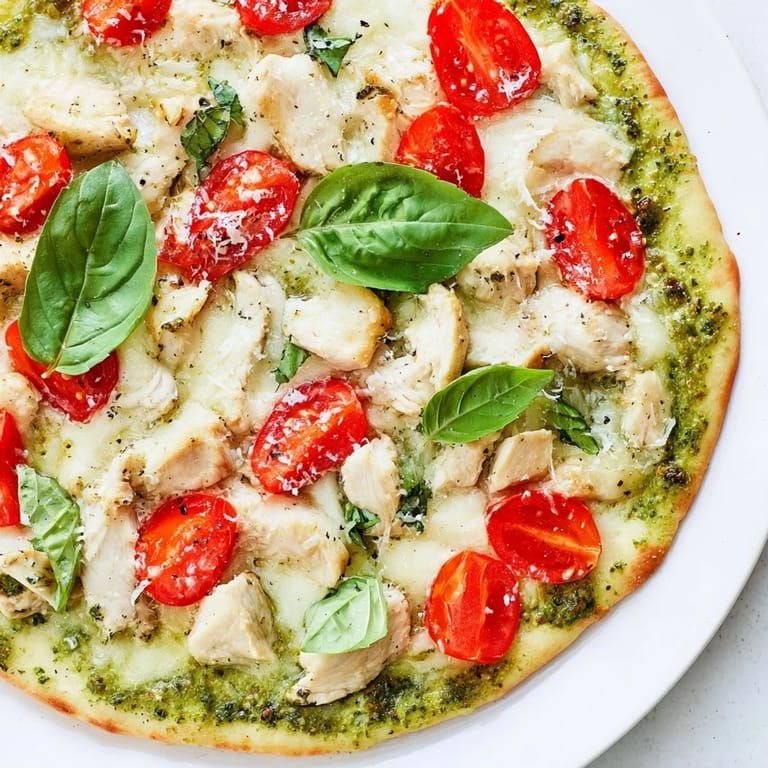
I've done this so many ways now that it barely feels like the same pizza anymore, which means it's endlessly forgiving. Try it with sun-dried tomatoes for intensity, or skip the tomato entirely and add pine nuts for crunch.
- A light drizzle of balsamic glaze after it comes out of the oven adds a slight sweet-sour note that makes people pause and ask what you did differently.
- Red pepper flakes scattered on top turn it from friendly to slightly spicy without overwhelming anyone at the table.
- A dollop of ricotta before baking creates pockets of creaminess that melt into everything around it.
 Save to Pinterest
 This pizza reminds me that the best recipes aren't the complicated ones—they're the ones that feel effortless to make but taste like you tried. That's the real magic.
Common Recipe Questions
- → What type of crust works best?
A thin crust provides a crisp base that balances well with the toppings. Store-bought or homemade both work well.
- → Can I use pre-cooked chicken?
Yes, diced or shredded cooked chicken tossed in olive oil and seasoning enhances the savory profile without extra cooking time.
- → Is basil pesto served fresh or cooked?
The basil pesto is spread raw over the crust before baking, allowing its fresh herb flavor to infuse the dish during cooking.
- → How can I ensure the crust is crisp?
Baking on a preheated pizza stone or baking sheet at a high temperature (475°F) helps achieve a golden, crisp crust.
- → What garnishes complement the pizza?
Fresh basil leaves add aroma and visual appeal, while a drizzle of balsamic glaze can enhance sweetness and depth.