 Save to Pinterest
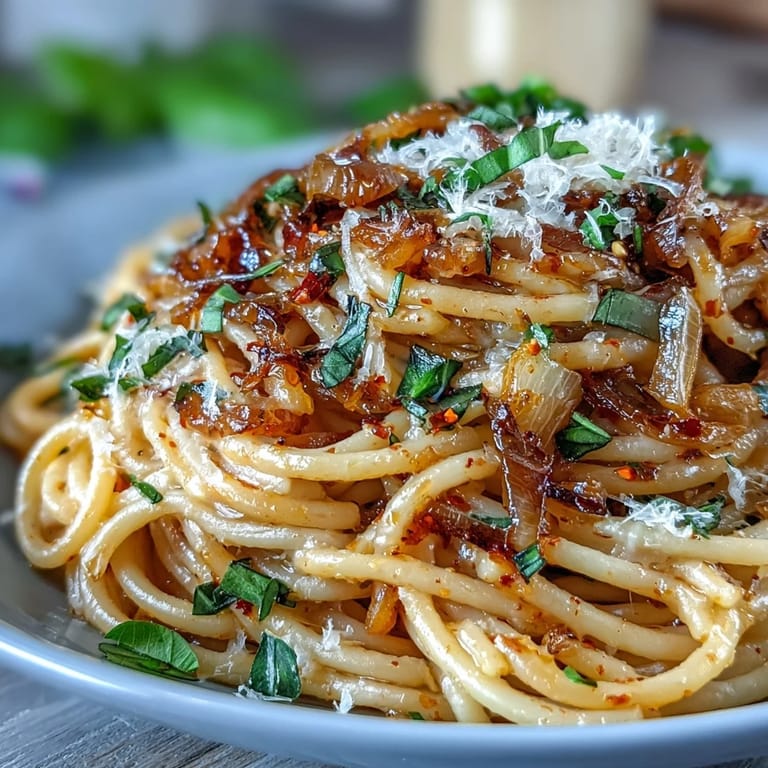
 I discovered this pasta on a Tuesday night when my fridge held nothing but onions, garlic, and a half-empty bottle of good olive oil. What started as a desperate attempt to make something interesting turned into the kind of dish that makes you stop mid-bite and wonder why you haven't been making it all along. The kitchen filled with this honeyed, almost sweet aroma as the onions surrendered to the heat, and by the time I drizzled that chili oil over everything, I knew I'd stumbled onto something special. My partner came home to find me standing over the stove with a slightly smug expression, which should tell you everything.
I made this for a dinner party where someone had just broken up with their long-term partner, and honestly, nobody wanted to talk about feelings that night. We sat around the table passing the Parmesan and asking for seconds, and somewhere between the first and third bite, I watched everyone relax a little. Food doesn't fix everything, but this particular dish somehow managed to be both bold enough to distract and comforting enough to matter.
Ingredients
- Pasta (12 oz): Any shape works, but spaghetti lets that silky chili oil coat every strand, and linguine feels a bit more elegant if you're trying to impress someone.
- Yellow onion (1 large): Don't skip the slicing step—thin, even pieces are what lets the onions break down into that caramel-like sweetness that makes this dish sing.
- Garlic (4 cloves total): Three go into the onions for depth, one gets sliced thin for the chili oil where it stays mostly whole and toasty.
- Extra virgin olive oil (6 tablespoons total): This isn't the place to use budget oil; the good stuff is what makes the chili oil taste sophisticated instead of just spicy.
- Red chili flakes (1 tablespoon): Start here but taste as you go—I've learned the hard way that some chili flakes hit harder than others, and your tolerance might be different than mine.
- Smoked paprika (1 teaspoon): Regular paprika works if that's what you have, but smoked adds this subtle depth that makes people ask what the secret ingredient is.
- Soy sauce (1 teaspoon): Just a splash, but it brings an umami punch that makes the whole dish more complex and satisfying.
- Parmesan cheese: Grate it fresh if you can—pre-grated tastes like cardboard in comparison, and this dish deserves the real thing.
- Fresh basil or parsley: Basil feels more elegant, parsley more casual; either way, it brightens everything at the end.
Tired of Takeout? 🥡
Get 10 meals you can make faster than delivery arrives. Seriously.
One email. No spam. Unsubscribe anytime.
Instructions
- Get your onions going:
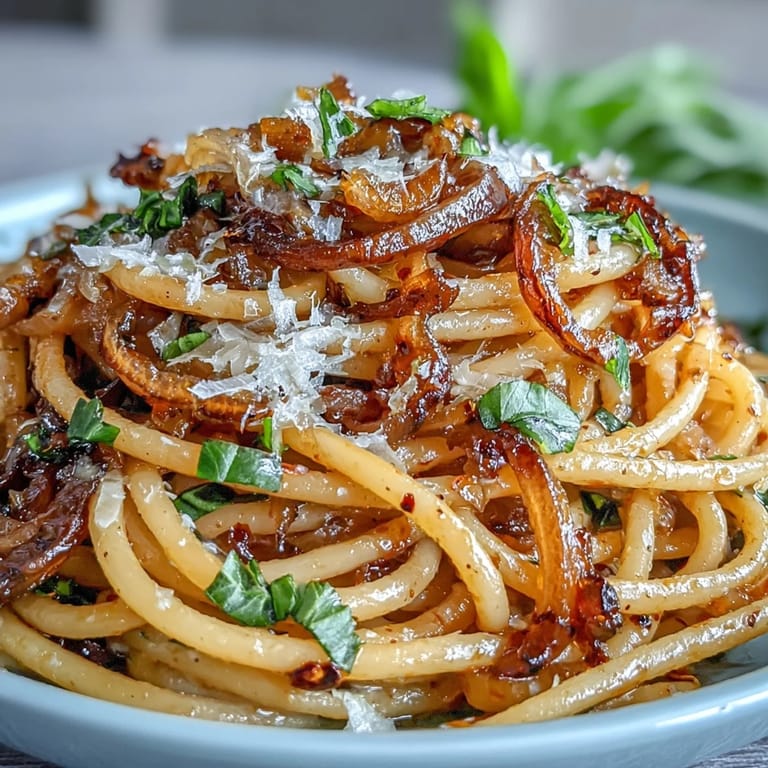
- Heat that olive oil in a large skillet over medium heat, then add your thinly sliced onions with just a pinch of salt. You're going to stir them every few minutes for the next 25 to 30 minutes—yes, really, that long—watching them transform from raw and sharp to soft and golden brown. The smell is the reward here; your whole kitchen will smell like caramel and comfort.
- Add garlic at the right moment:
- About five minutes before the onions are done, stir in your minced garlic and keep watching so it doesn't burn and turn bitter. You want it fragrant and integrated into those sweet onions, not browned and harsh.
- Make the magic chili oil:
- In a small saucepan, warm your good olive oil and add that thinly sliced garlic clove, letting it soften and become golden for a minute or two. Add your chili flakes and paprika, stirring constantly for a couple of minutes until the whole thing becomes fragrant and the spices bloom in the oil.
- Finish the chili oil:
- Pour in that teaspoon of soy sauce and let everything simmer together for just two minutes before turning off the heat. The oil should smell spicy and complex now, like something you'd find in a tiny Italian restaurant with mismatched chairs.
- Cook pasta like you mean it:
- Bring a big pot of salted water to a rolling boil and cook your pasta until it's al dente—tender but still with a little bite. Before you drain it, grab a cup of that starchy pasta water because it's liquid gold for bringing everything together smoothly.
- Bring it all together:
- Toss your hot pasta with those caramelized onions right in the skillet, then drizzle that chili oil over everything and toss gently so every strand gets coated. If it looks a bit dry, add a splash of that reserved pasta water and toss again until it's silky.
- Finish like you care:
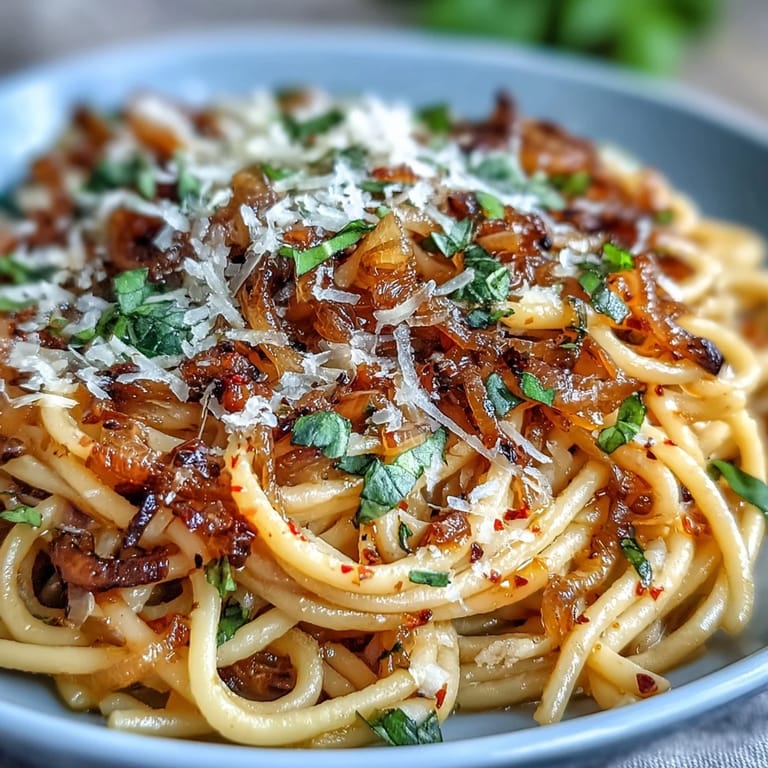
- Load generous handfuls of fresh Parmesan on top, scatter your chopped herbs across, and add extra chili flakes if you're feeling bold. Serve it immediately while everything is still hot and the cheese is melting into the warm pasta.
 Save to Pinterest
 There's a moment when you first taste this dish—that split second when the sweetness of the onions, the heat of the chili oil, and the richness of the Parmesan hit your tongue all at once—where you feel like you've unlocked something. It's simple but it doesn't taste simple, and somehow that's become the meal I make when I want to feel like I'm taking care of myself without actually trying very hard.
The Caramelization Question
People always ask if you really need to cook the onions that long, and the answer is absolutely yes, but here's why: raw onions are sharp and pungent, but low and slow heat breaks down their natural sugars and turns them into something almost candy-like. I used to rush this step and end up with onions that were just soft instead of truly caramelized, and the dish felt one-dimensional by comparison. Now I set a timer, pour myself something to drink, and actually let the kitchen do its thing while I do mine.
The Chili Oil Philosophy
This isn't a sauce that clings to your pasta in the traditional way—it's more of a fragrant coating, a flavor amplifier that sits on top and lets everything else shine through. The soy sauce in there might seem random, but it adds this subtle savory depth that makes people unable to quite figure out what they're tasting, which is exactly the point. I've made versions without it and versions with double, and there's definitely a sweet spot where it just adds intrigue without being identifiable.
Why This Works as a Last-Minute Dinner
The beauty of this dish is that the onions can be caramelized hours in advance and the chili oil tastes even better if it's made ahead and left to meld together. You can literally finish this entire meal in the time it takes pasta to cook, which makes it perfect for nights when you're exhausted but want something that tastes like you actually know what you're doing.
- Make the chili oil in the morning and let it sit in a jar on your counter—it gets better as it sits and you'll feel like a genius when dinner comes around.
- If you have any leftover pasta, the flavors actually deepen overnight in the refrigerator, making cold leftovers surprisingly good tossed with a little extra oil.
- This dish pairs beautifully with a crisp white wine or even just a simple green salad on the side if you want something fresh to balance the richness.
 Save to Pinterest
 This is the kind of recipe that proves you don't need complicated techniques or rare ingredients to make something memorable. It just needs patience, good ingredients, and the willingness to let simple things become extraordinary.
Common Recipe Questions
- → How long does it take to caramelize onions properly?
Caramelizing onions takes 25–30 minutes over medium heat. Stir occasionally and let them develop a deep golden color for the best sweetness and flavor.
- → Can I adjust the spice level?
Absolutely—reduce the chili flakes for milder heat or increase them for more spice. You can also serve extra chili flakes at the table for customizing.
- → What pasta shapes work best?
Spaghetti, linguine, or penne all work beautifully here. Long strands coat evenly with the chili oil, while shorter shapes hold pockets of caramelized onion.
- → How do I store leftovers?
Store in an airtight container in the refrigerator for up to 3 days. Reheat gently with a splash of water or olive oil to bring back the silky texture.
- → Can I make this vegan?
Yes—simply use a plant-based Parmesan alternative or skip the cheese entirely. The caramelized onions and chili oil provide plenty of savory depth.