 Save to Pinterest
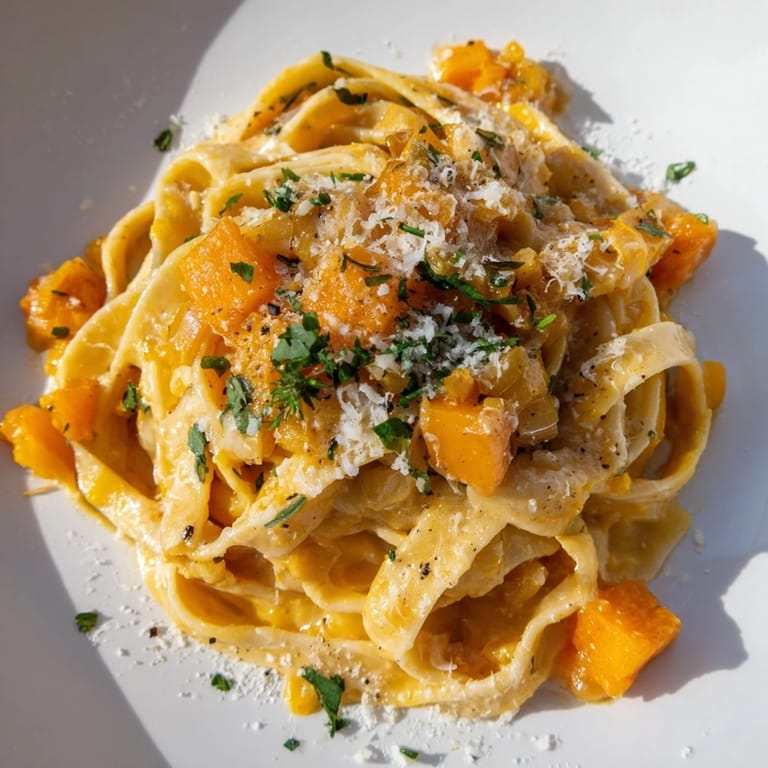
 There's something about autumn that makes me crave butternut squash in every form, but this pasta genuinely changed how I cook. One October evening, I had a friend visiting who'd just gone vegetarian, and I wanted to make something that didn't feel like a compromise. I roasted the squash until it turned golden and sweet, blended it into something almost luxurious, and watched her face light up as she twirled the first forkful. That's when I realized this wasn't a seasonal side dish, it was a proper main course that could compete with anything.
I made this for a dinner party where I was nervous about feeding a mixed group of carnivores and vegetarians. Someone asked for the recipe halfway through the meal, and I knew I'd nailed something real. The kitchen smelled like roasted garlic and brown butter even though there was barely any butter involved, which somehow made it feel more special than it had any right to be.
Ingredients
- Butternut squash: A medium one (about 2 lbs) is the sweet spot, not too watery and rich enough that you don't need tons of cream.
- Garlic: Roast it unpeeled so it turns buttery and loses any harshness, then squeeze it straight out of its skin.
- Yellow onion: One small diced onion adds sweetness without overpowering the squash, trust me on this.
- Fresh sage: If you can find it, use it, but dried sage works perfectly fine and actually concentrates the flavor.
- Fettuccine or tagliatelle: The wide, flat ribbons catch the sauce better than thin pasta would.
- Heavy cream: Half a cup is enough to make it velvety without making it heavy, or swap it for coconut milk if that's what you're doing.
- Vegetable broth: This keeps the sauce from breaking and lets the squash shine instead of overwhelming it.
- Parmesan: Freshly grated tastes infinitely better than the pre-shredded stuff, and you'll use less.
- Nutmeg: Just a whisper, optional but it's the secret that makes people ask what's in this.
Tired of Takeout? 🥡
Get 10 meals you can make faster than delivery arrives. Seriously.
One email. No spam. Unsubscribe anytime.
Instructions
- Get the squash ready:
- Peel and cube your butternut squash into roughly 1-inch pieces so they roast evenly. The peeler works best if you hold the squash firmly and take your time, trust me on the finger safety part.
- Season and roast:
- Toss the squash and whole garlic cloves with olive oil, salt, and pepper on a baking sheet. Roast at 400°F for about 25-30 minutes, stirring halfway through, until everything is tender with golden-brown caramelized edges.
- Start the pasta water:
- While the squash roasts, bring a large pot of generously salted water to a boil. The water should taste like the sea, which sounds dramatic but actually matters for flavor.
- Cook the pasta:
- Add your pasta and cook according to package instructions, but start checking a minute early so you catch it while it still has a little texture. Reserve at least half a cup of that starchy pasta water before draining.
- Build the sauce base:
- Heat the remaining tablespoon of olive oil in a large skillet over medium heat and sauté the diced onion with the sage until everything smells incredible and the onion is completely soft, about 4 minutes. You'll know it's ready when you can crush the onion against the side of the pan.
- Blend it smooth:
- Squeeze the roasted garlic cloves out of their skins and add them to a blender with the roasted squash, the sautéed onion mixture, vegetable broth, and cream. Blend until completely smooth and creamy, scraping down the sides as needed.
- Season the sauce:
- Pour the sauce back into your skillet over low heat and stir in the Parmesan and a pinch of nutmeg if you're using it. Taste it and adjust salt and pepper until it tastes like something you'd order at a restaurant, then add pasta water a splash at a time until you reach the consistency you want.
- Bring it together:
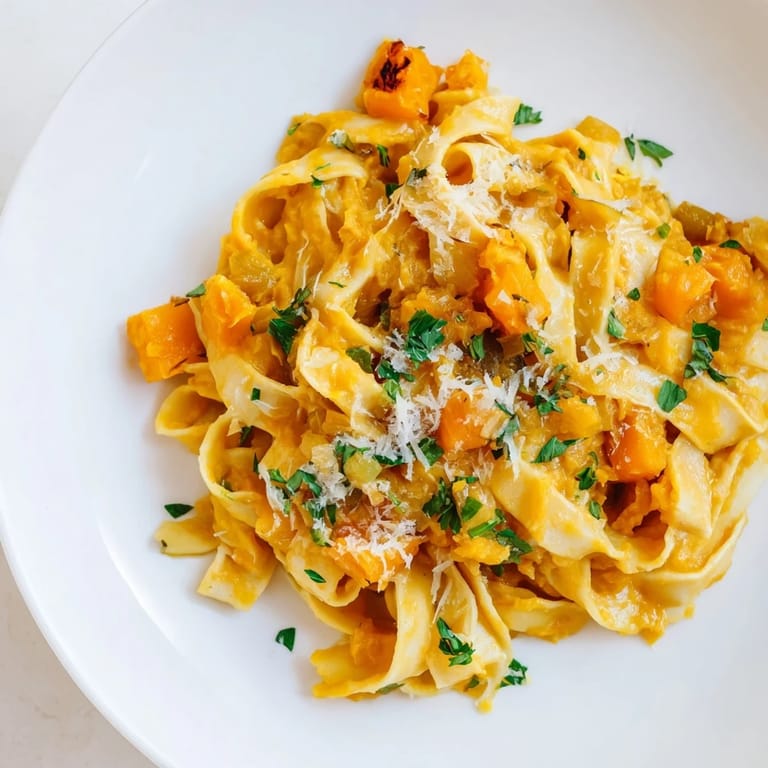
- Add your drained pasta to the sauce and toss gently for about 2-3 minutes so everything gets coated and warm. The pasta will continue absorbing the sauce as it sits, which is why you want it a touch looser than you think.
 Save to Pinterest
 The moment I realized this recipe was a keeper came when my partner took a bite and just got quiet, which never happens. That kind of quiet that means the food is doing something right, making everything else disappear for a second.
Why This Becomes Your Fall Default
Once you make this once, you'll start seeing butternut squash differently. It stops being something you roast as a side and becomes the canvas for something genuinely elegant. The beauty is that it doesn't require fancy techniques or ingredients you've never heard of, just patience with the roasting and respect for the ingredients you already have.
Making It Your Own
This recipe is flexible in ways that matter. If you want more texture, sauté some mushrooms or spinach and stir them in, or toast some walnuts and scatter them on top. The sauce is forgiving enough to handle additions, and honestly, that's when it starts feeling like your own version instead of following orders.
Timing and Serving Ideas
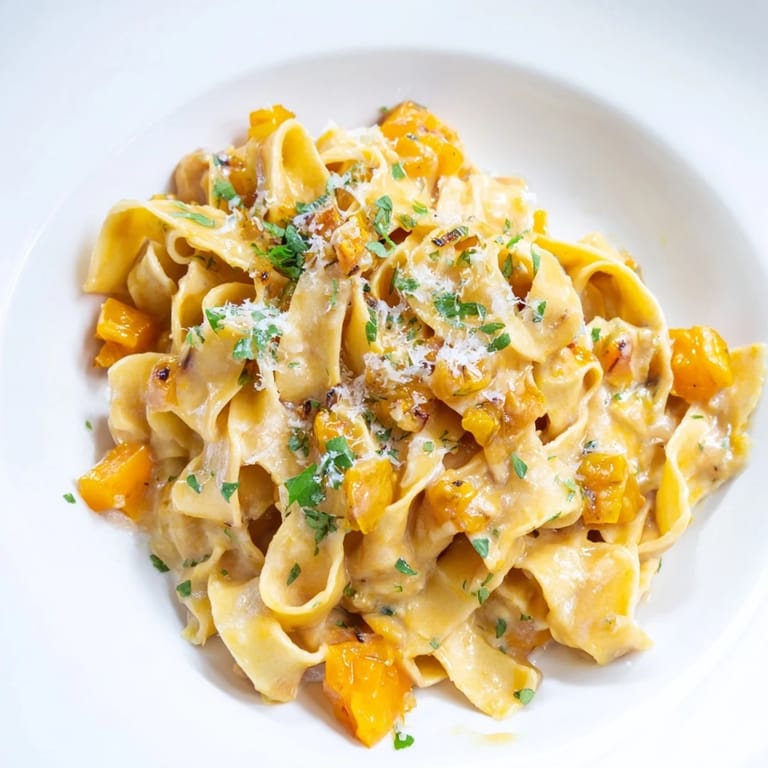
The whole thing takes about an hour, but most of that is hands-off roasting time. You can prep your squash while the oven preheats, start the pasta water while things roast, and have dinner on the table without feeling rushed. Serve it immediately with extra Parmesan and fresh parsley scattered on top, and pour yourself something crisp like a Pinot Grigio if you're in the mood.
- If the sauce seems too thick the next day, thin it with broth or pasta water when you reheat, never add more cream.
- Leftovers actually improve as the flavors settle, so make extra without feeling guilty.
- This works just as beautifully with gluten-free pasta or dairy-free cream if you need it to.
 Save to Pinterest
 This dish became my answer to the question of what to make when I want something that feels both comforting and elegant, without the fuss. Make it, and it'll probably become yours too.
Common Recipe Questions
- → How do I roast butternut squash for a creamy sauce?
Peel and cube the squash, then roast at 400°F for 25–30 minutes until tender and caramelized, enhancing natural sweetness and flavor.
- → Can I use a different pasta type with this dish?
Yes, fettuccine or tagliatelle work best to hold the sauce, but any long pasta like linguine or spaghetti can be used.
- → How do I make the sauce vegan and dairy-free?
Substitute heavy cream with full-fat coconut milk and use a plant-based Parmesan alternative to keep the sauce rich and creamy.
- → What herbs complement butternut squash in this dish?
Fresh sage and parsley bring earthiness and brightness, balancing the sweetness of the roasted squash.
- → How can I adjust the sauce consistency?
Add reserved pasta water gradually to thin the sauce until it coats the pasta smoothly without being too thick.
- → Are there good additions to enhance texture?
Sautéed mushrooms, spinach, or toasted walnuts add pleasant texture contrasts and extra flavor layers.