 Save to Pinterest
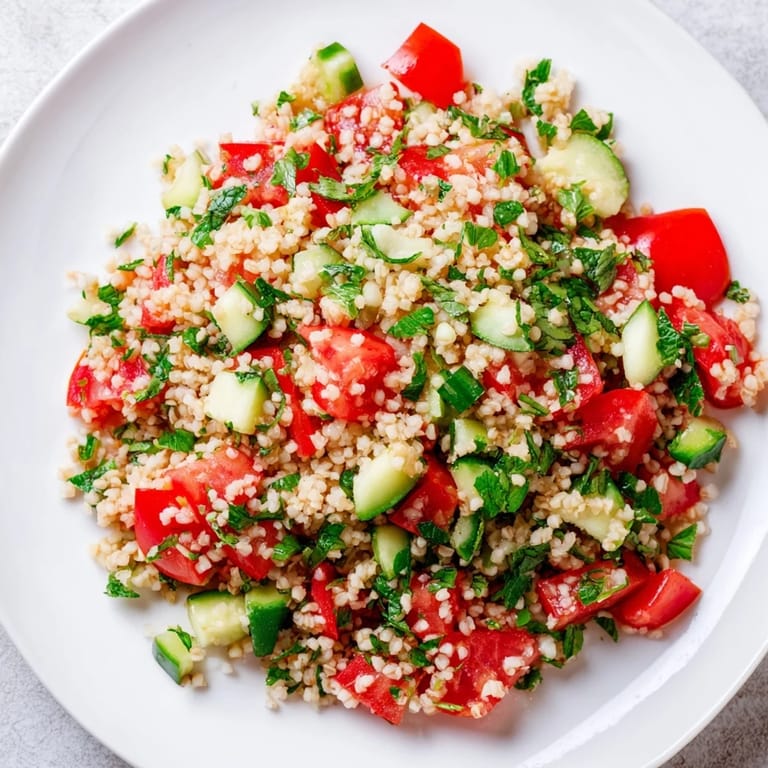
 The first time I made tabbouleh, I was standing in a cramped kitchen watching my Lebanese neighbor chop parsley with meditative precision. She didn't measure anything, just grabbed handfuls and kept talking while her knife moved in steady rhythm. I realized that day that this salad isn't about following a recipe perfectly—it's about the sound of fresh herbs hitting a cutting board and the smell that fills the air when lemon juice meets olive oil. That one afternoon taught me more about cooking than a hundred cookbooks ever could.
I made this for a potluck on a sticky summer evening when nobody wanted anything heavy, and it disappeared before I could even grab a plate. Someone asked for the recipe, then someone else, and suddenly I was writing it down on the back of a grocery list while standing in someone's kitchen. That's when I knew it wasn't just lunch—it was the kind of dish that brings people together without any fuss.
Ingredients
- Fine bulgur wheat: Use fine bulgur, not coarse—it hydrates beautifully and disappears into the salad instead of feeling grainy and separate.
- Boiling water: This is your shortcut; no stovetop cooking needed, just pour and wait while you prep everything else.
- Fresh tomatoes: Dice them small and salt them lightly before adding—this stops them from turning everything soggy.
- Cucumber: Peel and seed it to avoid a watery salad that falls apart by dinner time.
- Scallions: The white and light green parts matter most; slice them thin so they distribute their onion flavor evenly.
- Flat-leaf parsley: Don't skimp here—this is the backbone of the dish, not a garnish.
- Fresh mint: Half as much as the parsley, but essential; it's what makes people close their eyes and take another bite.
- Extra virgin olive oil: Good quality counts because it's raw and prominent; cheap oil makes the whole thing taste thin.
- Lemon juice: Fresh squeezed only—bottled juice tastes like it was shipped across an ocean instead of grown down the street.
- Garlic and salt: Mince the garlic fine so it dissolves into the dressing instead of asserting itself with chunky bites.
Tired of Takeout? 🥡
Get 10 meals you can make faster than delivery arrives. Seriously.
One email. No spam. Unsubscribe anytime.
Instructions
- Hydrate the bulgur:
- Pour boiling water over the bulgur, cover it, and step away for 10 to 15 minutes. You'll hear it settle and soften, and when you peek under the lid, it should be tender and have absorbed all the water. Let it cool to room temperature so it doesn't cook the delicate herbs later.
- Combine fresh ingredients:
- Add your diced tomatoes, cucumber, scallions, parsley, and mint to the cooled bulgur in one big bowl. Be gentle—you're mixing, not mashing; the herbs should stay visible and bright green.
- Make the dressing:
- Whisk olive oil, lemon juice, minced garlic, salt, and pepper in a small bowl until it looks emulsified and tastes sharp and salty. Taste it before it meets the bulgur so you can adjust if something needs more punch.
- Bring it together:
- Pour the dressing over everything and toss gently but thoroughly until every bit of bulgur is touched by the bright yellow oil and lemon. This is the moment when separate ingredients become one unified thing.
- Let flavors meld:
- Cover and refrigerate for at least 20 minutes, though two hours is even better. The cold helps the flavors settle and deepens everything you tasted when you made it.
- Serve with confidence:
- Taste one more time before serving and adjust the lemon and salt to match your mood that day. Some days bright and bold feels right, other days gentle and balanced.
 Save to Pinterest
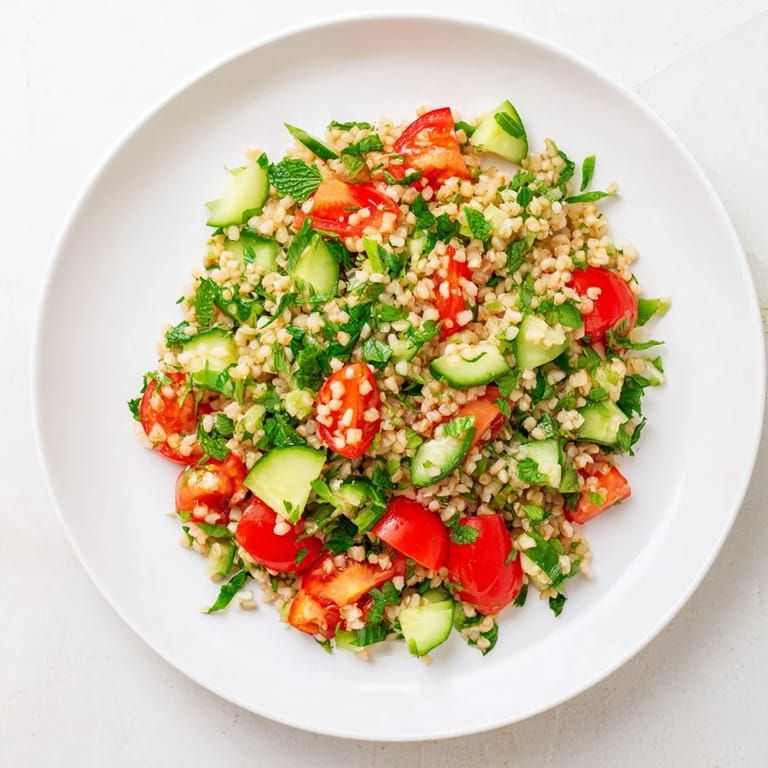
 There's a moment when you taste tabbouleh fresh from the fridge and realize it's not trying to be fancy—it's just good, honest food that somehow tastes like summer and friendship and the sound of herbs being chopped. That's the moment you understand why people in warm climates have been making this forever.
The Magic of Fresh Herbs
Parsley and mint aren't supporting actors in this salad—they're the whole show. Most people underestimate how much fresh herb you actually need, but once you make tabbouleh with a generous hand, you'll taste the difference immediately. The herbs are what make strangers ask for your recipe and friends ask when you're making it again.
When to Make This
This is the salad you make when it's warm outside and you don't want to heat up the kitchen. It's also the one you bring to potlucks and picnics because it travels well and actually tastes better the next day. In winter, it's a bright, green reminder that there are places where vegetables grow year-round and people know how to celebrate them.
Room Temperature or Chilled
Some people serve it cold straight from the fridge, letting the chill make each herb flavor sharper and brighter. Others let it sit on the counter for 15 minutes before serving, which softens the flavors into something warmer and rounder. Neither is wrong—it just depends on the day and the weather and how you're feeling about things.
- If you make it ahead, store it in an airtight container and it keeps for two days without the herbs losing their color.
- The bulgur will keep absorbing liquid, so add a splash more lemon juice and olive oil before serving if it tastes dry.
- Leftover tabbouleh stuffed into a pita with hummus and cucumber is somehow even better than it was as a salad.
 Save to Pinterest
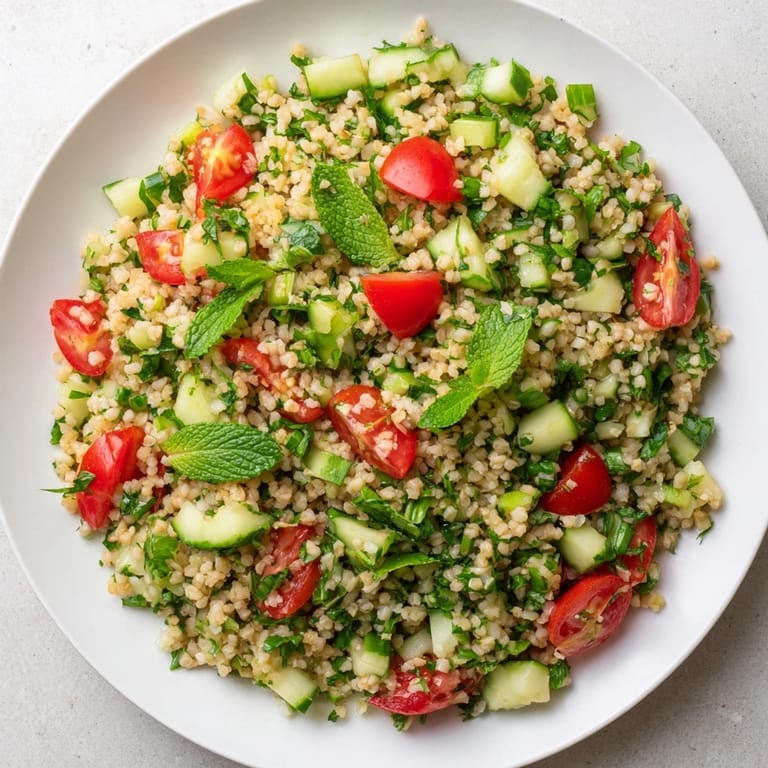
 This is the salad that proves you don't need complicated techniques or a long ingredient list to make something people actually want to eat. It's generous, bright, and honest—everything good food should be.
Common Recipe Questions
- → How do I prepare the bulgur wheat for this salad?
Pour boiling water over the bulgur, cover, and let it sit for 10–15 minutes until tender and water is absorbed. Then fluff with a fork before mixing with other ingredients.
- → Can I make this salad gluten-free?
Yes, substitute bulgur wheat with cooked quinoa or millet for a similar texture without gluten.
- → What herbs complement the flavors best?
Fresh flat-leaf parsley and mint provide bright, aromatic notes that balance the lemon dressing and vegetables.
- → How should I store leftovers?
Keep the salad chilled in an airtight container in the refrigerator and consume within 2 days for optimal freshness.
- → What are good serving suggestions?
Serve the salad cold or at room temperature alongside grilled meats, falafel, or as a light side dish.