 Save to Pinterest
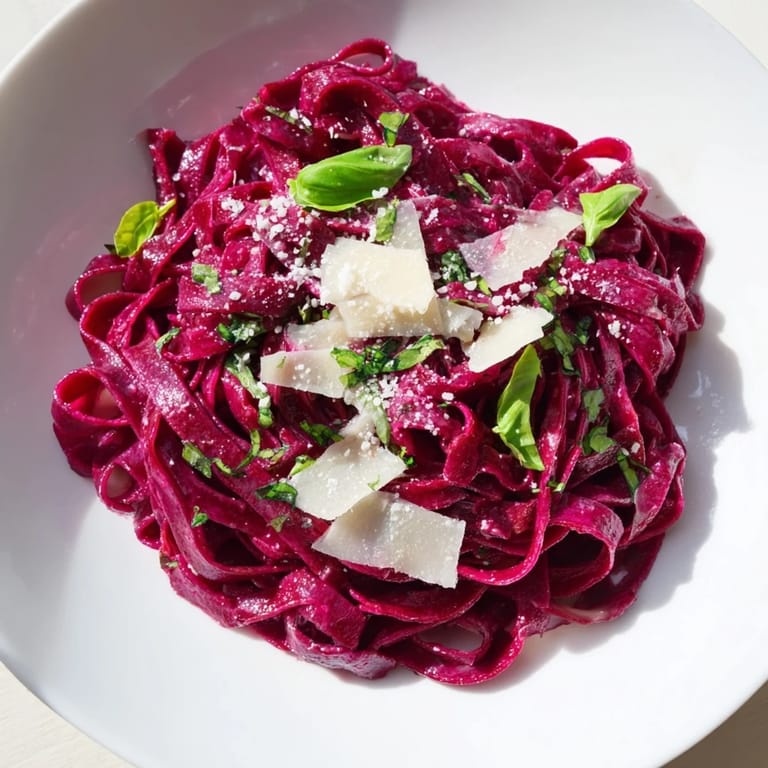
 I discovered beet noodles by accident when a farmer's market vendor handed me a bundle of impossibly vibrant beets and asked what I'd do with them. That evening, as I roasted them with olive oil and listened to the oven hum, the kitchen filled with an earthy sweetness that made me curious. I'd made pasta hundreds of times, but never thought to fold something this bold into the dough. The first time I pulled that magenta sheet from the pasta machine, I felt like I'd uncovered a secret—this wasn't just prettier pasta, it was a story you could taste.
I made this for friends on a late September evening when everyone was craving something that felt both celebratory and grounded. Someone said the pasta looked like it belonged in an art gallery, and another person went back for thirds. That's when I realized this dish works because it's not trying too hard—the beet does most of the talking, and everything else just listens.
Ingredients
- Medium beet (about 180 g): This is your foundation—choose one that's firm and unblemished, and don't skip the roasting; it deepens the sweetness and makes the puree less watery.
- Olive oil: A good extra virgin makes the roasting smell incredible and adds subtle richness to both the beet and the final pasta.
- All-purpose flour (2 cups or 250 g): The weight matters more than the volume here; too much flour and your dough becomes tough and the beet color gets diluted.
- Eggs (2 large): These are your binder; they bring everything together and give the pasta that tender bite when cooked.
- Beet puree (1/4 cup or 60 g): Measure this carefully after roasting—too little and the color is pale, too much and you'll need more flour to compensate.
- Butter or olive oil for serving: Finish with quality ingredients because the pasta's delicate flavor deserves it; I've found brown butter with sage is almost impossible to improve upon.
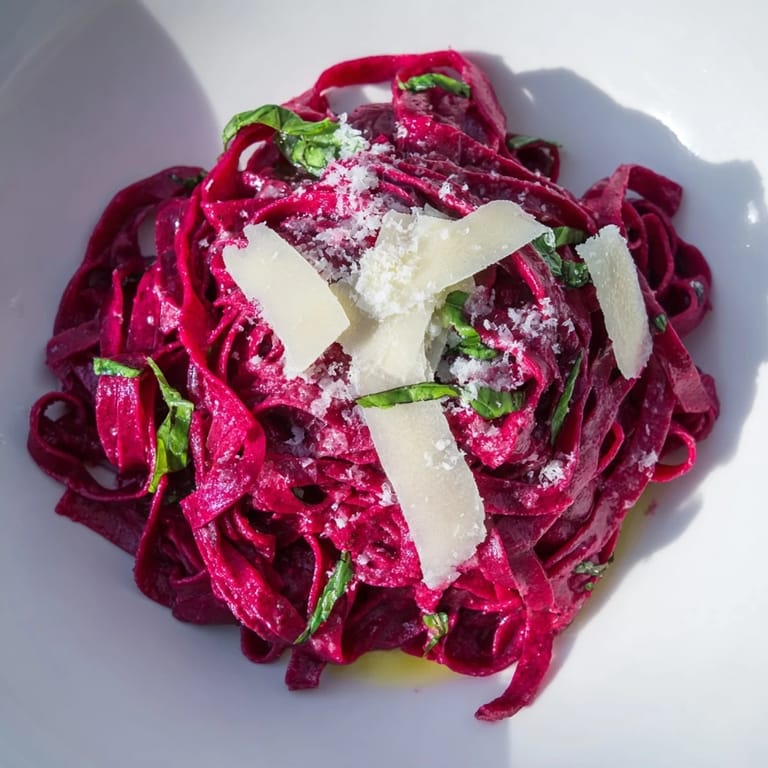
- Fresh herbs and cheese: These are optional but honestly essential—basil brings brightness, parmesan adds bite, and together they transform simple into something that tastes like a real meal.
Tired of Takeout? 🥡
Get 10 meals you can make faster than delivery arrives. Seriously.
One email. No spam. Unsubscribe anytime.
Instructions
- Roast the beet until it's completely tender:
- Wrap your trimmed beet in foil with a drizzle of olive oil and a pinch of salt, then slide it into a 400°F oven for 45 to 60 minutes. You'll know it's ready when a fork slides through like butter; let it cool just enough to handle.
- Make a silky puree:
- Once the beet has cooled, the skin slips off like a glove. Blitz it in a food processor until completely smooth—this matters because lumps will create weird texture in your dough.
- Create the flour well:
- Mound your flour on a clean counter and use your fingers to make a generous well in the center; this is where your wet ingredients live while you gradually bring in the flour.
- Build the dough slowly:
- Add your eggs, salt, and beet puree to the well, then use a fork to break the yolks and start pulling in flour from the edges. This prevents lumps and feels more controlled than dumping everything together.
- Knead until the dough is smooth:
- Once a shaggy mass forms, get your hands in and knead for 8 to 10 minutes until it becomes silky and springs back slightly when poked. The dough will feel a bit stickier than regular pasta dough because of the beet moisture.
- Let the dough rest:
- Wrap it tightly in plastic wrap and leave it on the counter for 30 minutes; this rest is when the gluten relaxes and the flavors settle together.
- Roll and cut with intention:
- Divide the dough into 4 manageable pieces, then run each through a pasta machine or roll with a pin to about 1 to 2 millimeters thick. Cut into whatever shape calls to you—I usually go for wide ribbons because they catch sauce better.
- Cook to just al dente:
- Fresh pasta cooks in 2 to 3 minutes in salted boiling water; taste a piece at 2 minutes and you'll taste the exact moment it goes from raw to tender. Drain, toss gently with butter or oil, and finish with herbs and cheese.
 Save to Pinterest
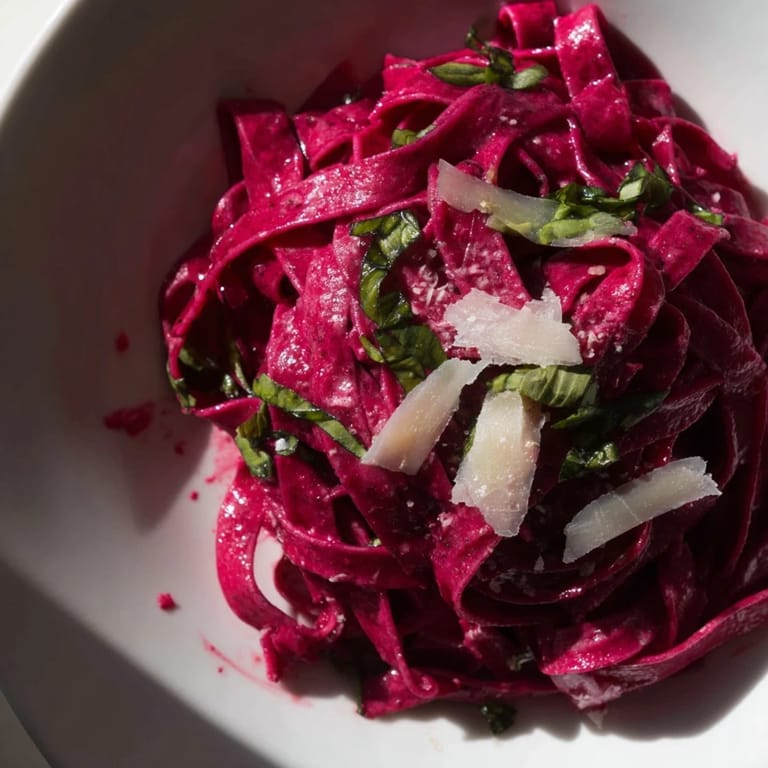
 There's a moment when you're rolling out the dough and the light catches the magenta sheet, and you realize you're holding something genuinely beautiful. My daughter called it 'princess pasta,' and now that's the only name that sticks in our house. Food doesn't need to be complicated to be memorable.
Why Fresh Pasta Changes Everything
Once you've made pasta by hand, dried pasta from a box starts to feel like a shortcut, even though there's nothing wrong with shortcuts. The difference is tactile and immediate—fresh pasta has a tender, yielding bite that you notice the moment it touches your tongue. With beet pasta, you're also getting that subtle earthiness that reminds you this came from soil and sun, not a factory. The whole experience of eating it feels more connected somehow.
Flavor Pairings That Make Sense
The beet brings natural sweetness and earthiness, which means you want accompaniments that either echo or contrast those qualities. Brown butter with sage is the obvious choice because the sage cuts through the sweetness while the butter wraps everything in richness. I've also had success with a light lemon cream sauce—the acidity brightens the beet without overwhelming it—and even just good olive oil with garlic and red pepper flakes if you want to stay minimal. The one thing to avoid is heavy tomato sauces; the beet flavor disappears and you're left with an odd color that doesn't match the taste.
Making It Your Own
This recipe is a jumping-off point, not a script. Some nights I've stirred in roasted garlic or a touch of nutmeg to the dough itself, and other times I've added crispy sage leaves and toasted walnuts on top. The vegan variation works beautifully if you use water and olive oil instead of eggs—the texture is slightly different but still tender and impressive. Don't be afraid to adjust; cooking is conversation, not recitation.
- If you want deeper beet flavor, you can increase the puree to 1/3 cup, but you'll need to add a tablespoon or two more flour to keep the dough from becoming sticky.
- Leftover fresh pasta keeps in the fridge for a day or two if you dust it well with flour and store it in an airtight container, and frozen it lasts weeks.
- The extra beet puree you might have left over makes an excellent base for soups, salad dressings, or even smoothies if you want to use every bit.
 Save to Pinterest
 This dish has taught me that the most impressive meals often come from simple ingredients treated with attention and care. Every time someone's eyes light up when I set down a bowl of beet noodles, I'm reminded that cooking is partly technique but mostly love.
Common Recipe Questions
- → How does roasting the beet affect the flavor?
Roasting concentrates the beet's natural sweetness and adds a subtle depth, enhancing the pasta's earthy flavor.
- → Can I substitute eggs for a vegan option?
Yes, replace each egg with 1/4 cup water and 1 tablespoon olive oil to maintain dough texture without eggs.
- → What’s the best way to roll out the dough?
Use a pasta machine or rolling pin to roll the dough 1–2 mm thick, ensuring even thickness for perfect cooking.
- → How long should the noodles be cooked?
Cook noodles in boiling salted water for 2–3 minutes until al dente, then drain immediately.
- → What accompaniments complement this pasta?
Light sauces like brown butter and sage, lemon cream, fresh herbs, or grated cheese pair wonderfully with the beet noodles.