 Save to Pinterest
 There's something about the smell of ground beef hitting a hot skillet that makes everything feel manageable, even on nights when I'm too tired to think about what's for dinner. One Tuesday, I was staring at a half-empty pantry and a box of pasta, and I thought: why not lean into the taco flavors I love but make it all happen in one pan? The result was this beef taco pasta skillet, and it's been my go-to ever since when I need something that feels like a real meal without the three-course production.
I made this for my neighbors last summer when they helped us move, and I remember their faces when they realized the whole meal was sitting in a single skillet on the stovetop. My neighbor Sarah kept saying, "This is ridiculous," but she meant it in the best way—like she couldn't believe something this good could be so straightforward. We ended up eating on the back patio with cold drinks, and it felt like the easiest dinner party I'd ever thrown.
Ingredients
- Ground beef (85% lean, 1 lb): The sweet spot between flavor and not leaving you with a pool of grease; 90% lean tends to taste a bit dry, while higher fat ratios make the whole thing feel heavy.
- Yellow onion and garlic: These two are your flavor foundation, so don't skimp on them or rush the cooking—they need time to soften and release their sweetness.
- Taco seasoning packet (1 oz): If you want to make your own, combine chili powder, cumin, paprika, garlic powder, onion powder, and a touch of cayenne, but the packet is honest and gets the job done.
- Short pasta (8 oz): Rotini, penne, or shells work best because they catch the sauce and cheese; long noodles tend to slip around.
- Beef broth and diced tomatoes (2 cups broth, one 14.5 oz can tomatoes): The liquid base cooks the pasta right in the skillet, so use low-sodium broth so you control the salt level.
- Shredded cheddar cheese (1½ cups): Don't use pre-shredded if you can help it—it has anti-caking agents that keep it from melting smoothly; a block of cheddar takes two minutes to grate.
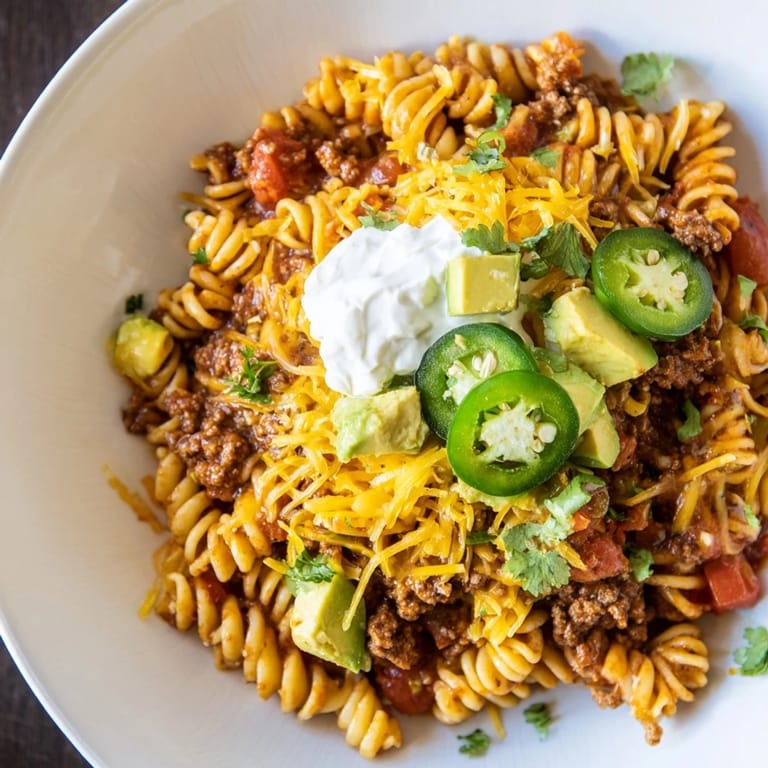
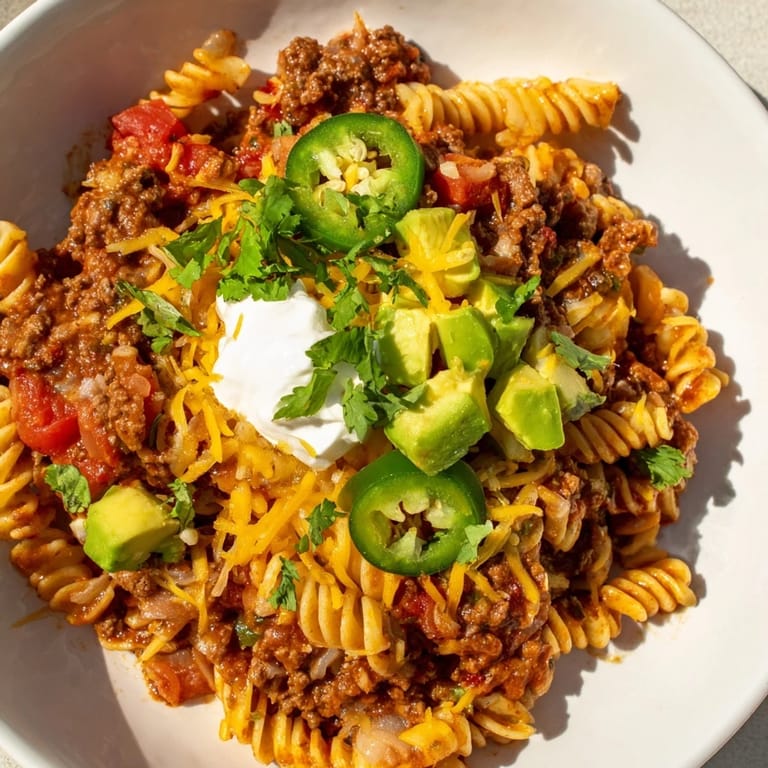
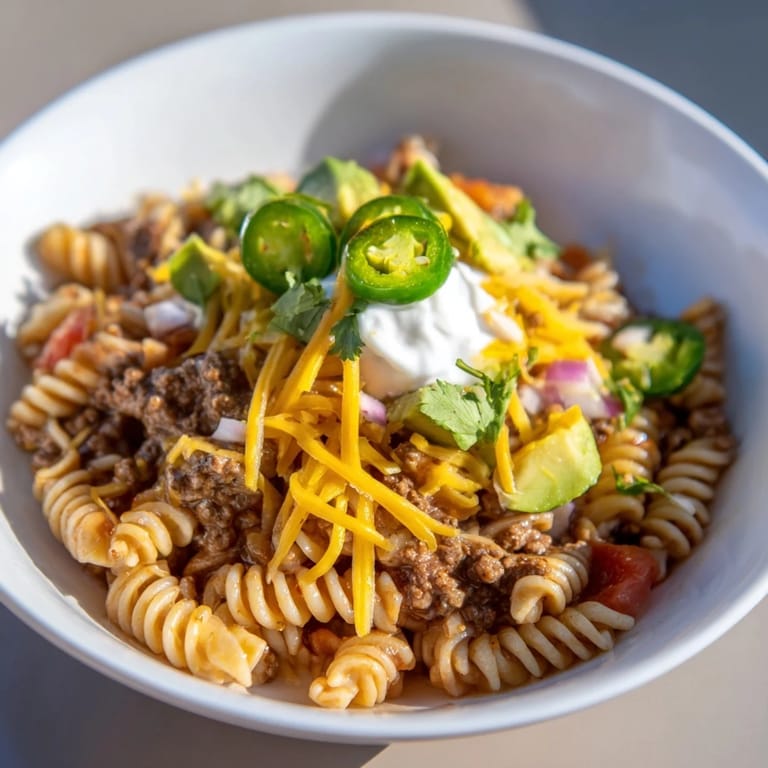
- Sour cream, cilantro, jalapeño, avocado (for serving): These are your finishing touches that turn a weeknight dinner into something with personality.
Tired of Takeout? 🥡
Get 10 meals you can make faster than delivery arrives. Seriously.
One email. No spam. Unsubscribe anytime.
Instructions
- Get the beef going:
- Heat your skillet over medium-high heat until it's hot enough that a drop of water sizzles immediately. Add the ground beef and break it up with a spoon as it cooks, making sure you're reaching into the corners where meat likes to clump. After about 5 to 6 minutes, it should be browned and cooked through; if there's a lot of rendered fat sitting in the bottom, pour some off.
- Build the flavor base:
- Lower the heat slightly and add your chopped onion, stirring it into the beef so it gets a little color. After 2 to 3 minutes, when the onion starts to soften and smell sweet, stir in the minced garlic and let it cook for just about a minute—you want it fragrant, not burned.
- Season and add the pasta:
- Sprinkle the taco seasoning, salt, and black pepper over everything and stir until the beef and vegetables are evenly coated. Pour in the uncooked pasta, beef broth, and the diced tomatoes with all their juice, stirring so the pasta isn't clumping together.
- Bring it to a boil and then simmer:
- Let the whole thing come to a rolling boil, then turn the heat down to medium-low, cover the skillet, and let it simmer for 12 to 15 minutes. Stir it a couple of times so nothing sticks to the bottom, and you'll know it's done when the pasta is tender and most of the liquid has been absorbed into the dish.
- Melt the cheese and rest:
- Pull the skillet off the heat and sprinkle all the shredded cheddar over the top, then cover it and let it sit for 2 to 3 minutes. The residual heat will melt everything into a creamy, cohesive meal.
- Finish and serve:
- Top each serving with fresh cilantro, a slice or two of jalapeño if you like heat, some diced avocado for creaminess, and a generous dollop of sour cream if you're using it.
 Save to Pinterest
 I learned the hard way that this dish transforms when you don't rush the cooling-down step at the end. Once, I was impatient and served it straight from the heat, and the cheese was still separate, kind of congealed and greasy. The next time, I waited those 3 minutes, and suddenly everything was silky and unified, like the pasta had absorbed the cheese into its very soul. That little pause changed everything.
Why This Skillet Method Works
Cooking the pasta directly in the broth instead of boiling it separately means you're not just softening the noodles—you're letting them absorb all the flavors from the beef, the seasonings, and the tomatoes. The starch from the pasta also thickens the cooking liquid naturally, so you end up with this cohesive, creamy sauce without needing a separate component. It's less dishes, less time, and honestly better flavor because everything is mingling together from the start.
Customizing to Your Taste
This recipe is genuinely flexible without losing its identity. You can swap the ground beef for ground turkey or chicken if you want something lighter, though you might need to add a touch more broth since poultry renders less fat. The cheese is where you can play too—Monterey Jack melts beautifully and has a milder flavor, or a Mexican cheese blend brings its own character. Even the vegetables are open to interpretation: bell peppers add sweetness, corn adds texture, and black beans turn it into something almost vegetarian-leaning.
Storage and Reheating Tips
Leftovers keep well in the fridge for up to 3 days in an airtight container, though the texture gets a bit softer each time you reheat it because the pasta continues to absorb liquid. When you're ready to eat again, warm it gently over medium heat with a splash of broth or water to loosen it back up, and top with fresh toppings instead of relying on what's been sitting in the fridge. If you're meal-prepping, consider cooking the base without the cheese and adding it fresh when you reheat, so it melts properly instead of congealing.
- Leftovers taste just as good cold the next day if you're into that kind of thing.
- Freeze portions in individual containers for up to a month if you want future-you to have an easy dinner ready to go.
- Don't add all your toppings until you're about to eat, or they'll get soggy and sad.
 Save to Pinterest
 This meal has saved me countless times when I needed something substantial and comforting without the mental load of a complicated recipe. It's the kind of food that brings people together without any fuss.
Common Recipe Questions
- → Can I use other pasta types?
Yes, short pasta like rotini, penne, or shells works best for even cooking and pairing with the sauce.
- → How can I make it spicier?
Add cayenne or fresh chopped chili with the onions for extra heat.
- → What cheeses can I substitute for cheddar?
Monterey Jack or a Mexican cheese blend are excellent alternatives that melt well.
- → Is it possible to use ground turkey instead of beef?
Absolutely, ground turkey or chicken can be used for a lighter version without sacrificing flavor.
- → How should leftovers be stored?
Refrigerate in an airtight container and consume within 3 days for best quality.