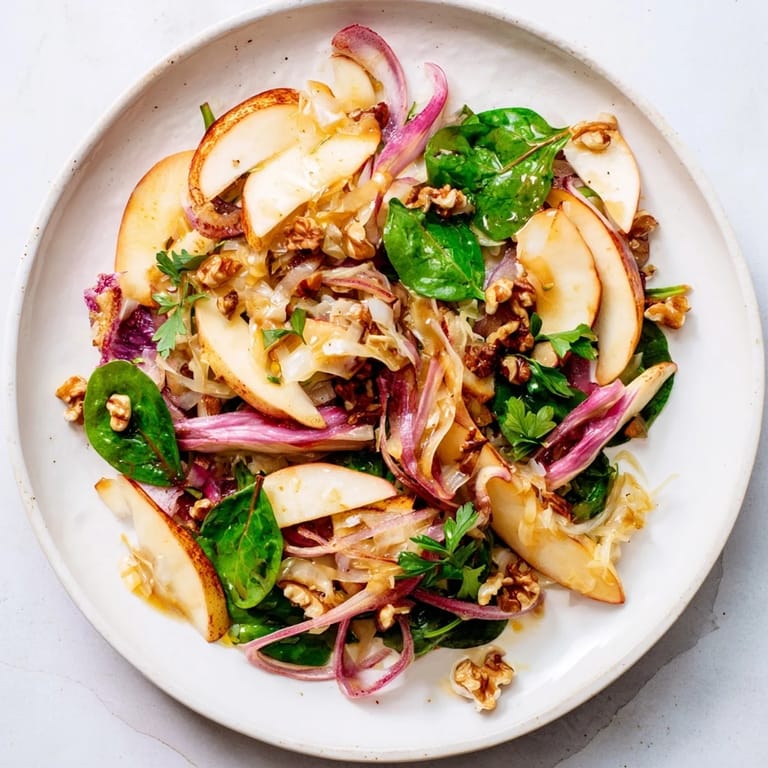
 Save to Pinterest
 The first time I saw warm sauerkraut paired with sweet apples, I will admit I raised an eyebrow. My German grandmother would have never mixed her fermented cabbage with fruit, let alone called it a salad. But one autumn afternoon at a little bistro in Prague, I took a skeptical bite and everything I thought I knew about this humble dish changed completely. The tangy crunch met caramelized sweetness in a way that made perfect sense.
Last winter, when my sister came over feeling under the weather, I threw this together with whatever I had in the fridge. She took one bite and looked at me with genuine surprise, asking why I had never made this for her before. Now she requests it every time she visits, and I have learned to always keep a jar of good sauerkraut in the back of my pantry just for these moments.
Ingredients
- 2 large apples: Honeycrisp or Gala hold their shape beautifully and bring natural sweetness that balances the tangy kraut
- 1 small red onion: Thinly sliced, these become sweet and mellow as they cook, melting into the background
- 2 cups sauerkraut: Drain it well but do not rinse—the fermentation liquid carries all the probiotic goodness and flavor
- 2 cups baby spinach or arugula: These delicate greens wilt just enough from the residual heat, adding freshness without becoming soggy
- 2 tbsp olive oil or unsalted butter: Butter adds richness while olive oil keeps it vegan and bright
- 1/4 tsp freshly ground black pepper: A little heat wakes up all the other flavors
- 1/4 tsp sea salt: Adjust based on how salty your sauerkraut already is
- 1/4 tsp ground caraway seeds: Optional, but they echo that classic rye bread flavor pairing
- 1 tsp honey or maple syrup: Just enough to help the apples caramelize and bridge the gap between sweet and tangy
- 1/4 cup toasted walnuts or pecans: Toast them yourself for the best flavor—raw nuts cannot compare to the depth you get from a quick toast
- 2 tbsp fresh parsley: Brings a bright, herbal finish that cuts through the richness
Tired of Takeout? 🥡
Get 10 meals you can make faster than delivery arrives. Seriously.
One email. No spam. Unsubscribe anytime.
Instructions
- Get the skillet going:
- Heat your olive oil or butter in a large skillet over medium heat until it shimmers slightly—this means the pan is ready to work its magic on those apples.
- Caramelize the fruit and aromatics:
- Add the sliced apples and onions, letting them sauté undisturbed for a minute or two before stirring, and cook for 6–8 minutes until the apples turn golden at the edges and the onions soften into sweet translucence.
- Build those layers of flavor:
- Drizzle in your honey or maple syrup, then sprinkle with caraway seeds, salt, and pepper, stirring constantly to coat everything evenly and letting it cook for just one minute to let the sugars meld with the warm apples.
- Bring in the kraut:
- Reduce the heat to low and fold in the drained sauerkraut, letting it warm through for 2–3 minutes until heated but still retaining its satisfying crunch.
- Wilt the greens gently:
- Remove the skillet from heat and tumble in the spinach or arugula, tossing just until it begins to soften from the residual warmth.
- Finish with texture:
- Transfer everything to a platter and scatter those toasted nuts and fresh parsley on top while it is still steaming slightly.
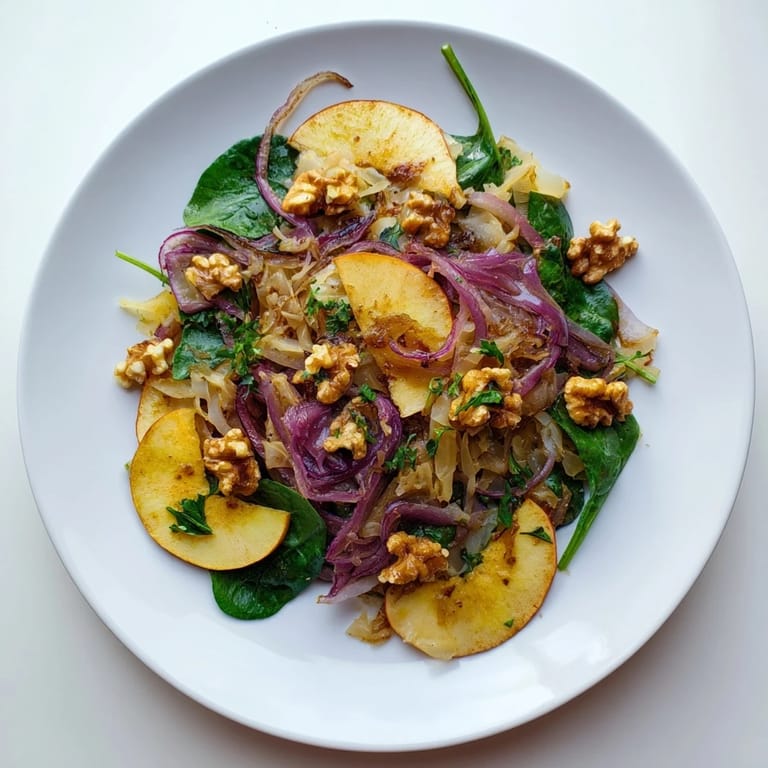 Save to Pinterest
 What started as a skeptical experiment has become one of those dishes I turn to when I want something nourishing but not heavy. There is something about warm salads that feels like a hug on a plate, and this particular combination never fails to make me pause and appreciate how simple ingredients can create something extraordinary.
Choosing Your Apples
After testing countless varieties, I have found that Honeycrisp and Gala strike the perfect balance between sweet and tart while holding their shape during cooking. Avoid very soft apples like McIntosh or Red Delicious, as they will break down too quickly and disappear into the dish.
Make It Your Own
Thinly sliced fennel bulb adds an incredible anise note that plays beautifully with the caraway seeds. A splash of apple cider vinegar right at the end wakes everything up if your sauerkraut is particularly mild. Sometimes I throw in some dried cranberries for extra bursts of sweetness.
Serving Suggestions
This shines alongside roast pork or your favorite sausages, but do not underestimate it as a stand-alone lunch with a chunk of crusty bread. The warmth makes it feel substantial enough to satisfy, yet light enough that you will not feel weighed down afterward.
- Try it topped with a fried egg for breakfast
- Leftovers keep beautifully for a day or two in the refrigerator
- Double the recipe because it disappears faster than you would expect
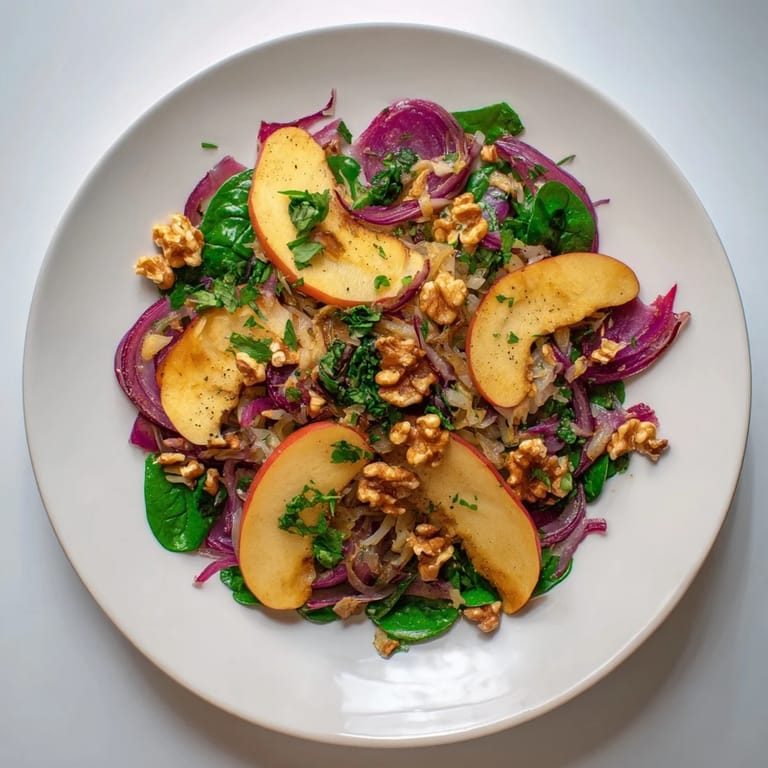 Save to Pinterest
 Hope this brings as much warmth to your table as it has to mine. Sometimes the most unexpected combinations become the ones we treasure most.
Common Recipe Questions
- → What does warm apple and sauerkraut taste like?
The combination offers a delightful balance of sweet and tangy flavors. Caramelized apples provide natural sweetness that complements the sharp, fermented taste of sauerkraut, while onions add depth and honey ties everything together.
- → Can I make this dish ahead of time?
Yes, you can prepare the apple and sauerkraut mixture in advance and reheat gently. Add fresh spinach just before serving to maintain texture. The flavors actually develop and meld better after resting.
- → What apples work best in this skillet?
Honeycrisp or Gala apples are ideal because they hold their shape during cooking while providing natural sweetness. Firm, slightly tart varieties work well to balance the sauerkraut's acidity.
- → Is this suitable for special diets?
This dish is naturally vegetarian and gluten-free. For vegan preferences, use olive oil instead of butter and maple syrup instead of honey. It's packed with probiotics from the sauerkraut and vitamins from fresh apples and greens.
- → What proteins pair well with this?
This warm skillet complements roast pork, sausages, or chicken beautifully. It also works as a standalone light meal when topped with toasted nuts for protein. The European flavors make it an excellent side for hearty meat dishes.
- → Can I substitute the sauerkraut?
While sauerkraut provides essential tang and probiotics, you could use other fermented vegetables like kimchi for a spicier kick, or fresh cabbage with a splash of vinegar for a milder version.