 Save to Pinterest
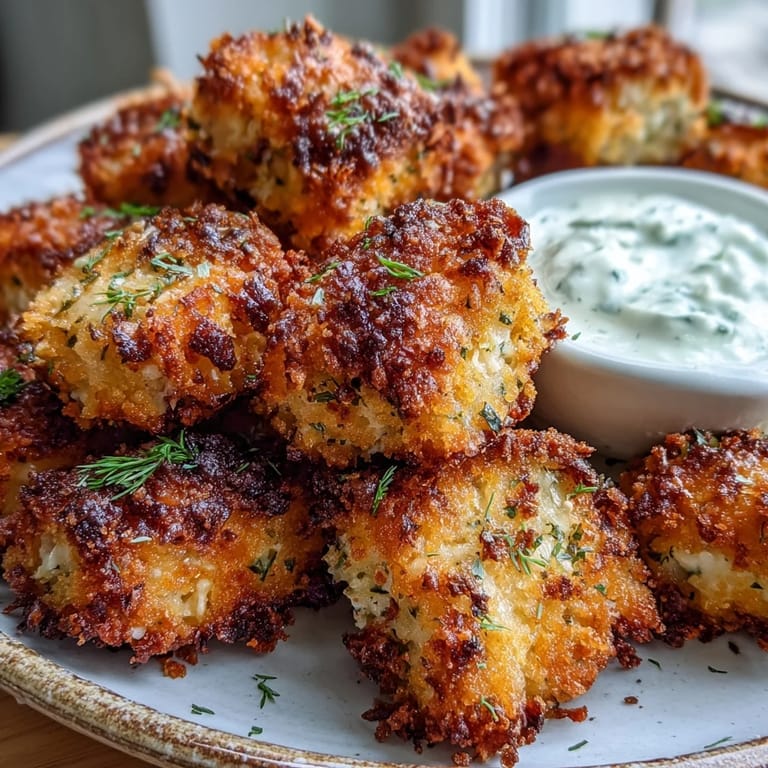
 My roommate texted me a photo of salmon at the farmers market with just one word: crispy? I had about thirty minutes and zero fancy equipment, so I grabbed what I had and started experimenting. Twenty minutes later, we were pulling golden, crunchy bites from the oven while standing in the kitchen in our work clothes, and honestly, those salmon pieces tasted better than anything we'd ordered out that week.
I made these for my partner's coworkers during a casual game night, and they disappeared before anyone even sat down. Someone asked for the recipe, then three more people did, and I realized this wasn't just a quick appetizer—it had somehow become the thing people actually remembered about the evening.
Ingredients
- Salmon filet (1 lb, cut into 1-inch pieces): The star of the show—buy it fresh if you can smell it, and don't be shy about asking the fishmonger to remove any pin bones.
- All-purpose flour (1/4 cup) and kosher salt (1/2 tsp): This thin layer is your adhesive foundation; it helps the egg wash cling properly so the panko sticks.
- Egg (1, beaten) and Dijon mustard (2 tsp): The mustard adds a subtle tang that makes people wonder what they're tasting, plus it helps bind everything.
- Panko breadcrumbs (1 cup): Japanese panko is coarser and crispier than regular breadcrumbs, which is the whole reason these turn out so golden.
- Onion powder, garlic powder, dried dill, dried parsley (1/2 tsp each) and kosher salt (1/2 tsp): These seasonings live in the panko coating, so taste a tiny pinch before you commit—adjust if your dried herbs are old.
- Olive oil or cooking spray: Just enough to prevent sticking; you're not deep frying here.
Tired of Takeout? 🥡
Get 10 meals you can make faster than delivery arrives. Seriously.
One email. No spam. Unsubscribe anytime.
Instructions
- Prep your station:
- Set your oven to 400°F and line a baking sheet with parchment, giving it a light spray or brush of oil. Line up three shallow bowls like you're running a production line—this makes everything faster and less messy.
- Dry the salmon:
- Pat those salmon pieces completely dry with paper towels; any moisture will make the coating slip off during cooking. This single step is why your crust actually stays crispy.
- Build your dredging station:
- Bowl one gets flour mixed with salt. Bowl two is beaten egg whisked with Dijon mustard. Bowl three combines panko, onion powder, garlic powder, dried dill, parsley, and salt—give it a quick stir so the seasonings distribute evenly.
- Coat each piece:
- Working one salmon bite at a time, roll it in the flour, tap off the excess, dip it into the egg mixture until coated, then press it firmly into the panko so the breadcrumbs really stick. You should hear a satisfying crunch as you press.
- Let them rest:
- Arrange coated pieces on a plate and wait five minutes; this gives the coating time to set so it won't fall off in the oven. Use this time to clean your bowls or pour a drink.
- Arrange on the sheet:
- Space the salmon bites out in a single layer with a little room between each one so the heat circulates and you get even browning. Too close together and they'll steam instead of crisp.
- Bake then broil:
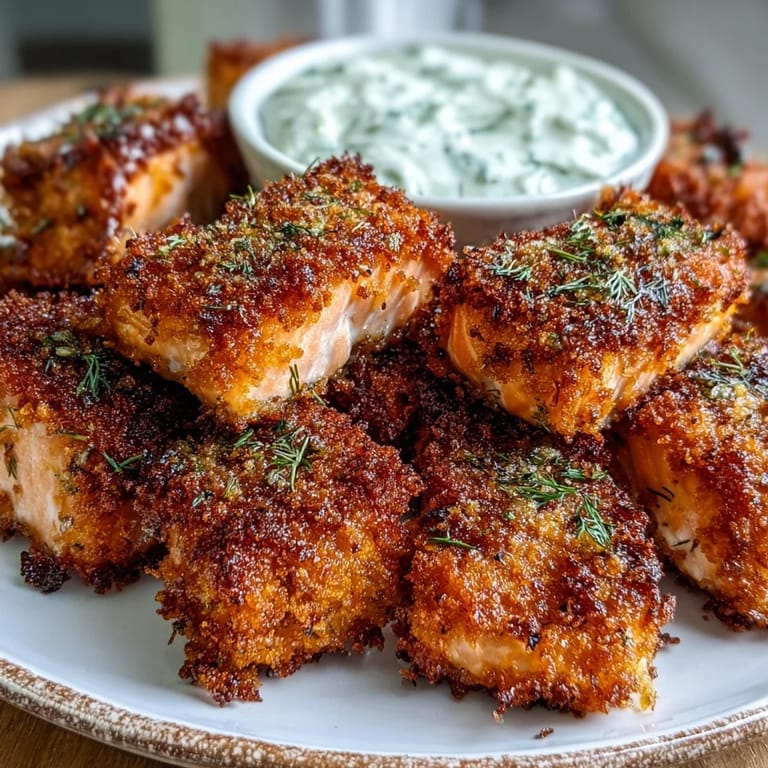
- Bake at 400°F for ten minutes until the panko just starts turning golden and the salmon is almost cooked through. Flip everything with tongs or a fork, switch to broil, and cook for two to three minutes more until the top side is deep golden and crispy.
- Finish and serve:
- Let them cool for just a minute so they firm up slightly, then serve hot with whatever sauce calls to you. Lemon wedges never hurt.
 Save to Pinterest
 There's something about watching someone take that first bite, feel the crust crack between their teeth, and then pause for a second like they're genuinely surprised that it tastes this good. That pause is my favorite part of cooking.
The Broiler Is Your Best Friend Here
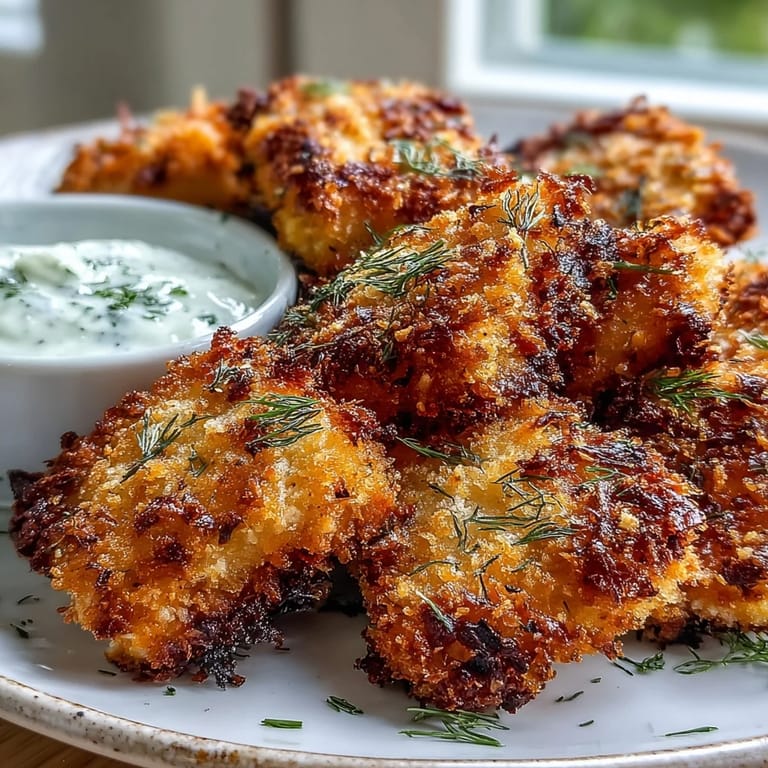
I used to bake these all the way through and wondered why they looked pale and felt limp. The moment I added that broiler step, everything changed—the outside turned deeply golden while the fish stayed tender inside. The broiler's intense, direct heat does what a regular oven can't, crisping the panko without drying out the salmon. Watch carefully during those last few minutes though, because the difference between golden and burnt is maybe ninety seconds.
Why Panko Changes Everything
Regular breadcrumbs are fine, but panko is shaped differently—it has bigger, airier flakes that stay crispy instead of becoming dense and chewy. When you press panko onto that egg wash, it actually adheres in a way that creates pockets of air, and those pockets are what give you that satisfying crunch. I learned this the hard way after making these with regular breadcrumbs and feeling disappointed, then switching to panko and feeling vindicated.
Serving Ideas and Variations
These work as an appetizer for fancy occasions, as a casual snack straight from the pan, or even as a protein for a salad if you're trying to feel virtuous. Lemon wedges are the obvious choice, but tartar sauce adds richness, and a simple yogurt-dill dip brings everything together smoothly. You can also air fry these at 400°F for eight to ten minutes if you want even less fuss, which is honestly the move on weeknights when you're tired.
- Mix smoked paprika into the panko for a subtle smoky note that sneaks up on you.
- These freeze beautifully before cooking, so you can prep a batch and bake them straight from the freezer with just a minute or two added to the cooking time.
- If someone at your table is gluten-free, find panko made from rice instead and use tamari instead of Dijon mustard.
 Save to Pinterest
 These salmon bites have become my answer to almost every casual gathering, because they're easy enough that cooking them doesn't stress me out, but impressive enough that people think I tried. That's really all you need from a recipe.
Common Recipe Questions
- → Can I air fry these salmon bites instead of baking?
Yes, cook at 400°F for 8–10 minutes in your air fryer, shaking halfway through. The panko will still get beautifully crispy with less oil.
- → What's the purpose of Dijon mustard in the egg wash?
The mustard adds tang and helps the panko adhere better to the salmon. It also adds subtle depth that complements the fish without overpowering.
- → Can I make these gluten-free?
Absolutely. Substitute gluten-free all-purpose flour and gluten-free panko breadcrumbs. The coating method stays exactly the same.
- → Why rest the coated salmon before baking?
Letting the coated pieces rest for 5 minutes helps the breading set and adhere better during baking, reducing the chance of the coating falling off.
- → What dipping sauces work best with these?
Classic tartar sauce, lemon-garlic aioli, or a simple yogurt-dill dip all pair beautifully. A squeeze of fresh lemon also brightens the flavors.
- → Can I use frozen salmon for this?
Yes, but thaw completely first and pat very dry with paper towels. Excess moisture prevents the coating from sticking properly and achieving crispiness.