 Save to Pinterest
 Last summer, my neighbor came over with a bag of mangoes from her farmer's market haul, and I suddenly had to decide what to do with them before they got too soft. I'd been craving something bright and uncomplicated for dinner anyway, so I grabbed some chicken from the freezer and started thinking about what would make the fruit sing instead of feel out of place. That's how this one-pan wonder came together—half improvisation, half happy accident, and now it's something I make whenever I want the kitchen to smell like vacation.
I made this for my sister's birthday potluck, and I remember watching people's faces light up when they took their first bite—that moment when they realized the sweetness of the mango wasn't an accident but actually planned. She asked for the recipe before dessert even came out, which felt like the ultimate compliment.
Ingredients
- Boneless, skinless chicken breasts (4, about 150 g each): The blank canvas here, and staying with breasts keeps things lean and straightforward without sacrificing juiciness if you don't overcook them.
- Olive oil (2 tablespoons): This carries all your flavor into the chicken and vegetables, so don't skip it or use something flavorless.
- Fresh lime juice (2 tablespoons): The brightness that stops this dish from feeling heavy—bottled juice works if fresh isn't available, but fresh really does change everything.
- Chili powder (2 teaspoons): Your heat source and also your color, so choose a decent one that smells vibrant when you open the jar.
- Smoked paprika (1 teaspoon): This brings a whisper of depth and warmth that plain paprika just doesn't capture.
- Garlic powder (1 teaspoon): Saves you from mincing, and disperses evenly through the marinade without any raw garlic bite.
- Salt and black pepper (1 teaspoon salt, 1/2 teaspoon pepper): Your seasoning foundation; taste the marinade before you use it and adjust if needed.
- Red and yellow bell peppers (1 each, sliced): The color heroes here, and they get soft and sweet as they roast alongside everything else.
- Red onion (1 small, sliced): Adds a gentle sharpness that mellows beautifully in the oven heat.
- Zucchini (1 medium, sliced): The mild presence that soaks up all the flavor and stays tender without falling apart.
- Ripe mango (1 large, peeled and diced): This needs to be ripe but still firm enough to hold its shape through roasting; test by giving it a gentle squeeze.
- Fresh cilantro (2 tablespoons, chopped): Scattered at the end for brightness and that fresh herb note that ties everything together.
- Lime wedges: For squeezing over your plate just before eating, which brings everything into sharper focus.
Tired of Takeout? 🥡
Get 10 meals you can make faster than delivery arrives. Seriously.
One email. No spam. Unsubscribe anytime.
Instructions
- Heat your oven and prepare:
- Crank the oven to 400°F and line your baking sheet with parchment paper or give it a light greasing so nothing sticks. This takes 30 seconds but saves you a lot of scrubbing later.
- Mix your magic marinade:
- Whisk together the olive oil, lime juice, chili powder, paprika, garlic powder, salt, and pepper in a small bowl until everything is evenly distributed and smells absolutely intoxicating. If you taste a tiny drop on your finger, you should feel the warmth of the spices and the brightness of the lime.
- Coat the chicken:
- Pour half the marinade over your chicken breasts in a bowl or bag and toss them around until they're completely coated. Let them sit for at least 10 minutes while you prep the vegetables—this brief marinating time makes a real difference in flavor.
- Arrange your vegetables:
- Spread the sliced peppers, onion, and zucchini directly on your prepared baking sheet and drizzle with the remaining marinade, tossing everything so the flavors get distributed. The vegetables should be in a relatively even layer so they roast evenly.
- Build your one-pan masterpiece:
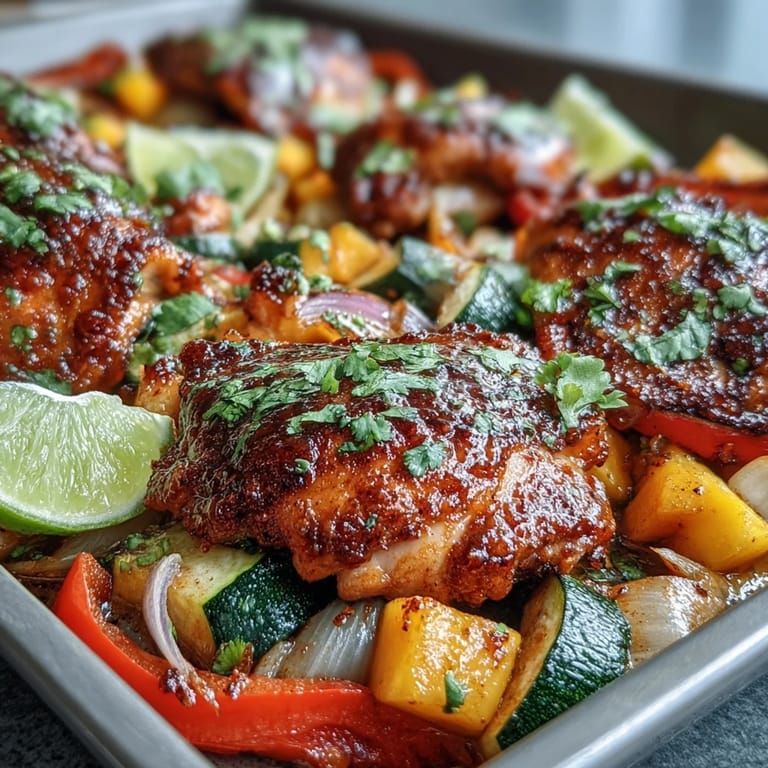
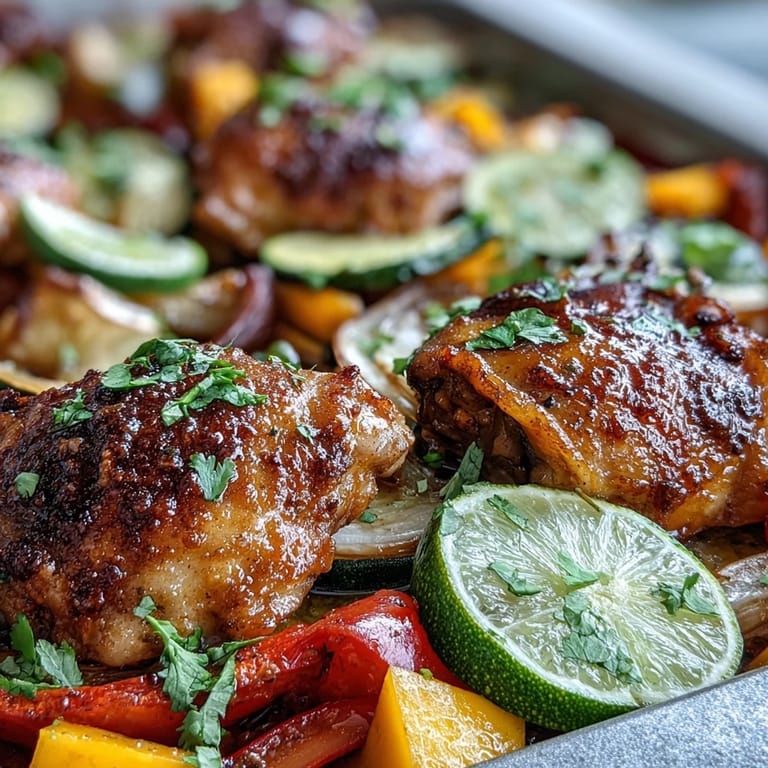
- Nestle the marinated chicken breasts on top of the vegetables, then scatter the diced mango across the whole pan. The mango will release its juices as things roast, creating this sweet-spicy glaze that coats everything.
- Roast until golden:
- Slide the pan into your 400°F oven for 25 to 30 minutes, keeping an eye on things after about 20 minutes so you catch the moment when the chicken reaches 165°F internally but before anything gets dry. You'll know you're close when the vegetables are starting to caramelize at their edges and the whole kitchen smells like a spiced summer dream.
- Rest and finish:
- Pull the pan from the oven and let everything sit for 5 minutes before serving—this brief rest helps the chicken stay juicy when you cut into it. Scatter the fresh cilantro over everything just before plating, and serve with those lime wedges so people can add a final squeeze of brightness.
 Save to Pinterest
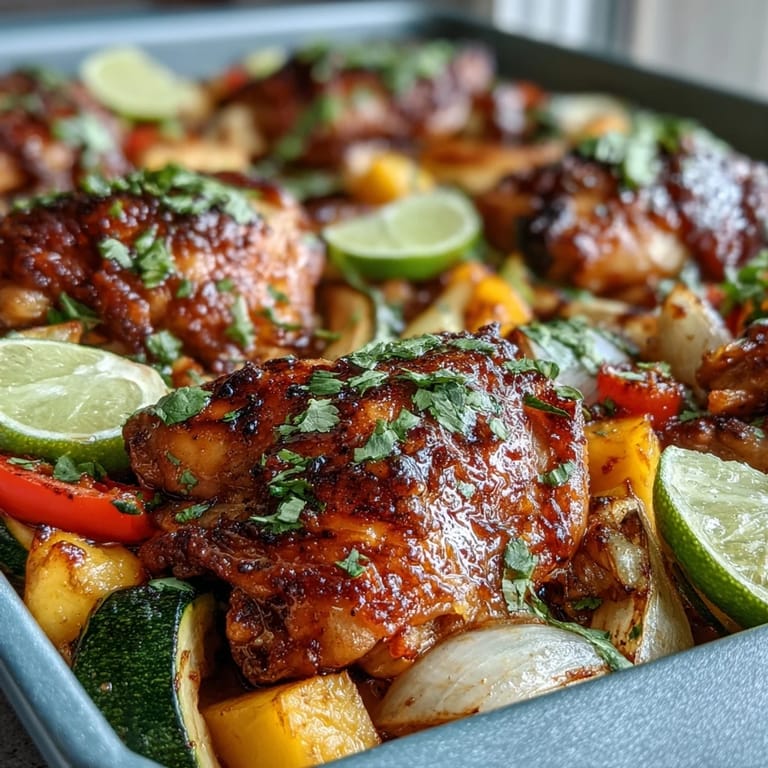
 There's something almost meditative about opening the oven halfway through and seeing everything transform from separate ingredients into one cohesive, golden-edged meal. It reminds me why I cook in the first place—not just to eat, but to witness that small miracle of flavors finding their way together.
The Right Mango Matters
A truly ripe mango is the difference between this tasting bright and interesting versus mealy and overly sweet. Pick one that yields slightly to pressure but isn't mushy, and if you're not sure, ask the produce person or buy one a day or two before you plan to cook so it has time to develop. Color alone is a terrible judge—I've had green mangoes that were perfectly sweet and red ones that tasted like nothing, so always go by feel and smell.
Why This Works as One-Pan Dinner
The beauty of roasting everything together is that the chicken's juices mingle with the vegetable moisture and the marinade, creating a natural pan sauce that everything sits in. The vegetables cook faster than the chicken would alone, so timing works out perfectly if you arrange things thoughtfully and use a hot enough oven. You're essentially building layers of flavor without any extra steps or equipment, which is honestly the dream when you're hungry and tired.
Make It Your Own
This recipe is forgiving enough to adapt based on what you have in your kitchen or what sounds good that night. The framework is solid—protein, acid, spice, vegetables, and that sweet fruit element—so you can swap ingredients without the dish falling apart. Once you understand how the components work together, you'll start seeing this as a template rather than a rigid instruction.
- Try boneless chicken thighs instead of breasts if you want more forgiving, juicier meat that's harder to overcook.
- Pineapple makes a beautiful substitute for mango if that's what you have, or even fresh peaches in late summer work surprisingly well.
- Add half a teaspoon of crushed red pepper flakes to the marinade if you want more heat and less sweetness, or leave the mango off entirely if you're going fully savory.
 Save to Pinterest
 This dish has a way of disappearing from plates faster than you'd expect, even among people who swear they don't like fruit in their savory food. That moment when skepticism turns to quiet appreciation is worth every minute of prep.
Common Recipe Questions
- → Can I use chicken thighs instead of breasts?
Yes, boneless chicken thighs work beautifully in this dish. They may take slightly longer to cook through, so check for an internal temperature of 165°F before serving.
- → How can I make this spicier?
Add crushed red pepper flakes to the marinade, use a hotter chili powder, or slice fresh jalapeños to roast alongside the vegetables for extra heat.
- → What other fruits work well in this dish?
Pineapple makes an excellent substitute for mango, offering a tangier sweetness. Peaches or apricots also pair nicely with the chili flavors when in season.
- → Can I prep this ahead of time?
You can marinate the chicken up to 24 hours in advance. Slice vegetables and store them in the refrigerator, then assemble everything on the baking sheet just before cooking.
- → What sides go well with this bake?
Serve over brown rice, quinoa, or cauliflower rice for a complete meal. Warm tortillas, crusty bread, or a simple green salad also complement the flavors nicely.