 Save to Pinterest
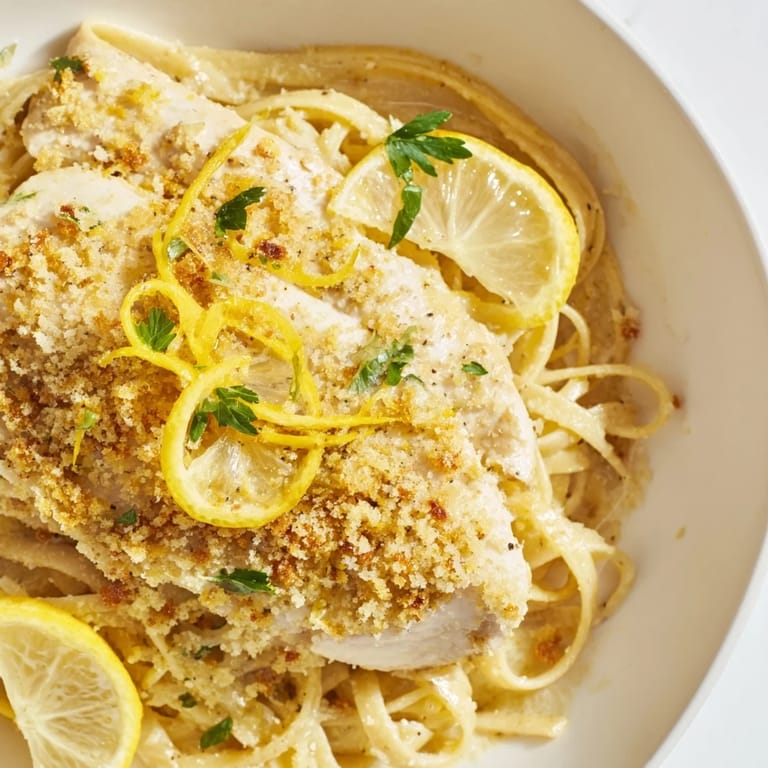
 I discovered this dish on a Tuesday evening when I was rifling through my pantry, looking for something that felt more exciting than the usual weeknight rotation. There on the shelf sat a lemon—not the prettiest one, admittedly—and I found myself remembering a lemon posset I'd had at a restaurant months earlier, that silky-sharp dessert that somehow felt both elegant and comforting. The idea struck me suddenly: what if I borrowed that caramelized-sugar-and-bright-citrus magic and built it into a savory main course? Within minutes, I was already planning how chicken with a brûléed lemon crust could transform a simple pasta into something that felt like a special occasion, even on a random weeknight.
I made this for my best friend on the first night she was back in town after moving away, and I still remember her stopping mid-bite, fork suspended, just shaking her head at the flavor combination. She said it tasted like someone had figured out how to bottle the feeling of summer in a single bite—which is probably more poetic than I deserve, but it stuck with me. That's when I knew this wasn't just a random Tuesday night experiment; it was something worth repeating.
Ingredients
- Boneless, skinless chicken breasts (2 large): Pound them gently to even thickness so they cook evenly and stay tender; this small step prevents one end from drying out while the other's still cooking.
- Granulated sugar (2 tablespoons): This is what gives you that restaurant-quality brûléed crust, but it only works if the chicken's surface is completely dry when you apply it.
- Lemon zest (from 3 lemons total): Zest before you juice—the oils in the zest are where all the brightness lives, and once you've squeezed the fruit, you can't get them back.
- Sea salt and freshly ground black pepper: Season generously at each stage; the layers of salt and pepper in this dish are what prevent it from tasting one-note.
- Olive oil (3 tablespoons total): Use good olive oil you'd actually want to taste, not the cheap cooking kind—it shows up in the final sauce.
- Dried linguine or spaghetti (320 g): Al dente is non-negotiable here; the sauce will finish cooking the pasta slightly as everything comes together.
- Unsalted butter (2 tablespoons): Start with cold butter and let it melt slowly with the oil to build a better foundation for the garlic.
- Garlic (3 cloves, minced): Fresh garlic is crucial; don't even think about the jarred kind, which tastes flat and slightly bitter here.
- Heavy cream (200 ml): Cold straight from the fridge, and don't skip the pasta water when you're combining everything—that starch is what keeps the sauce from breaking.
- Parmigiano-Reggiano cheese (60 g, grated): Buy a wedge and grate it yourself; the pre-grated stuff has additives that prevent it from melting as smoothly.
- Fresh parsley (2 tablespoons, chopped): Add it at the very end so it stays bright and doesn't lose its flavor to heat.
Tired of Takeout? 🥡
Get 10 meals you can make faster than delivery arrives. Seriously.
One email. No spam. Unsubscribe anytime.
Instructions
- Dry and season the chicken:
- Pat each breast completely dry with paper towels—moisture is the enemy of a good sear—then season generously with salt, pepper, and lemon zest on both sides. Let it sit for a minute so the salt can start doing its thing.
- Sear until nearly cooked:
- Heat that tablespoon of olive oil in a large skillet over medium-high heat until it shimmers, then lay the chicken breasts down and resist the urge to move them. Sear for 4 to 5 minutes per side until the edges are sealed and the center is almost cooked through.
- Apply the brûlée:
- Sprinkle a heaping tablespoon of sugar over each breast, using your torch to caramelize it into a golden, crackling crust. If you don't have a torch, place the skillet under a hot broiler for just 1 to 2 minutes—watch it closely because it goes from perfect to burnt in seconds.
- Rest and slice:
- Transfer the chicken to a cutting board and let it rest for 5 minutes so the juices redistribute. Slice thinly against the grain to keep each piece tender.
- Cook the pasta:
- Bring a large pot of generously salted water to a rolling boil and cook your pasta until it's almost al dente—it should still have a tiny bit of resistance when you bite it. Reserve a cup of pasta water before draining; you'll need it later.
- Build the sauce:
- In your large skillet over medium heat, melt the butter with olive oil, then add minced garlic and let it become fragrant without browning, about one minute. Stir in lemon zest and juice, then pour in the cream and let it come to a gentle simmer—don't let it boil hard or it might separate.
- Melt in the cheese:
- Take the skillet off the heat for a moment while you add the grated cheese, stirring until it's completely melted and the sauce is smooth. Taste and adjust salt and pepper—be honest about what it needs.
- Bring it all together:
- Return the skillet to medium heat, add your drained pasta, and toss gently until every strand is coated. Add pasta water a splash at a time, stirring constantly, until you have a silky sauce that clings to the pasta.
- Plate and finish:
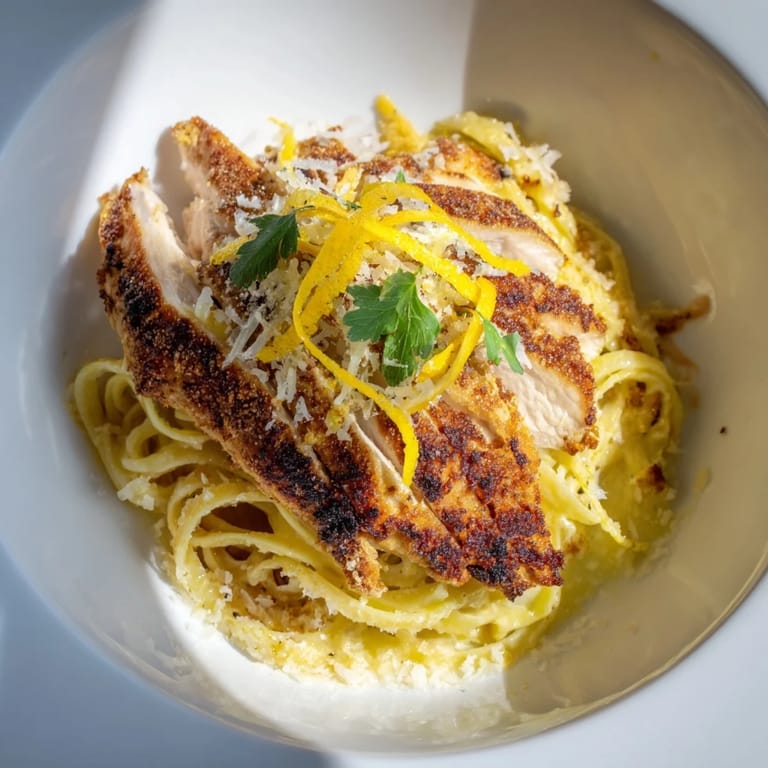
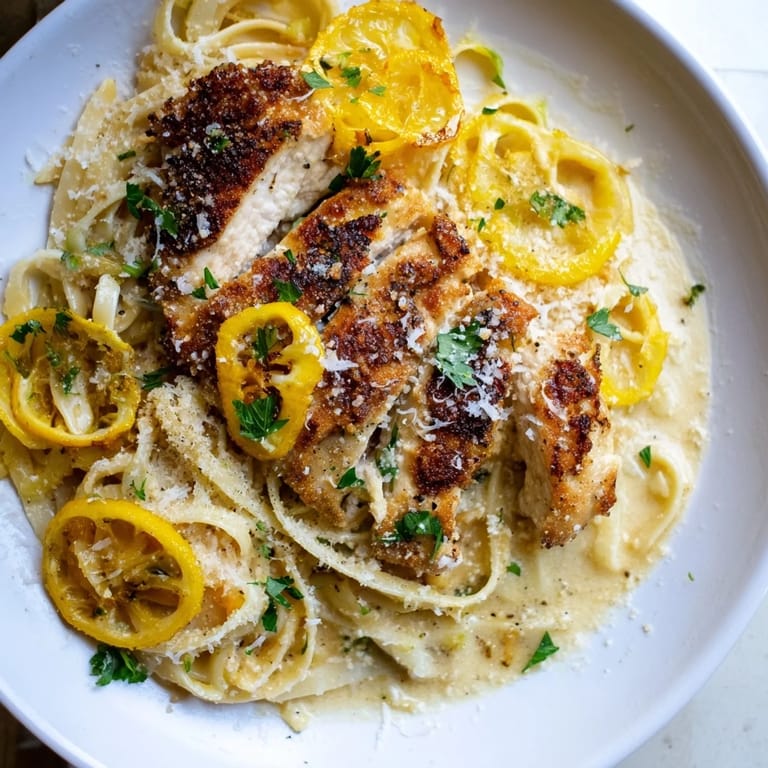
- Divide the pasta among four bowls, then arrange the sliced brûléed chicken on top. Scatter extra lemon zest, a handful of fresh parsley, and a final shower of grated cheese over everything.
 Save to Pinterest
 The first time I plated this for guests, my mom took one bite and looked genuinely confused, as if her brain couldn't quite reconcile that the caramelized crust tasted like lemon and not like dessert. In that moment of dissonance, I realized that's exactly what makes this dish special—it breaks the rules in the kindest possible way, and that small shock of surprise is half the joy.
The Magic of Borrowed Flavors
There's something satisfying about taking a flavor combination that traditionally belongs on a dessert plate and letting it loose in savory territory. The brûlée technique is borrowed from the pastry world, sure, but when you apply that golden, crackling sugar to chicken, something unexpected happens—the sweetness gets halted by the brightness of the lemon, and the richness of the cream sauce acts as a mediator between both worlds. It's the same principle that makes salted caramel work; contrast creates depth, and depth creates something memorable.
Timing Without the Stress
The beautiful thing about this dish is that even though it feels fancy, nothing actually needs to happen simultaneously if you don't want it to. You can sear and brûlée the chicken first, then set it aside while you make the sauce—the chicken will stay warm, and you avoid that chaotic scramble of managing five different pans at once. If you're really nervous, you can even sear the chicken up to 30 minutes ahead and just torch it right before serving, which means you can focus on the pasta and sauce when your guests are actually sitting down.
Why This Sauce Actually Works
I spent way too much time trying to make a lemon cream sauce that didn't taste like I was eating a thick, heavy soup, and the answer turned out to be absurdly simple: trust the pasta water and don't drown it in cream to begin with. The starch in that water acts as an emulsifier, which means the cream and fat actually cling to the pasta properly instead of pooling at the bottom of the bowl. It's also why you can make this sauce more or less rich depending on your mood—more pasta water makes it lighter and brighter, less makes it more luxurious.
- Taste your sauce before adding salt; the cheese and lemon juice both contribute saltiness, so you might need less than you think.
- If your sauce breaks or looks grainy, remove it from heat, let it cool for 30 seconds, then whisk in a splash of cold pasta water—this usually fixes it completely.
- The parsley should go in at the very last moment, ideally after the pasta is already plated, so it stays green and fresh instead of turning drab from the heat.
 Save to Pinterest
 This recipe feels like proof that the best meals don't have to be complicated—they just need to feel intentional, a little unexpected, and made with actual attention to flavor. Make it once and you'll understand why I keep coming back to it.
Common Recipe Questions
- → How do I achieve the caramelized lemon crust on the chicken?
After searing the chicken, sprinkle sugar atop each breast and use a kitchen torch or broiler to melt and caramelize the sugar until golden and crisp.
- → Can I substitute the type of pasta used?
Linguine or spaghetti work best to hold the creamy sauce, but other long pasta like fettuccine can be used as a substitute.
- → What is the purpose of reserving pasta water?
Adding reserved pasta water to the sauce helps loosen and emulsify it, creating a silky texture that evenly coats the pasta.
- → How can I add more texture to the dish?
Toasted pine nuts or breadcrumbs sprinkled on top provide a pleasant crunch that complements the creamy pasta and tender chicken.
- → Is there a recommended wine pairing?
A crisp Sauvignon Blanc or Pinot Grigio pairs well, enhancing the dish's bright citrus flavors without overwhelming its richness.