 Save to Pinterest
 There's a moment that happens every time I set out to build a charcuterie board—that brief pause before arranging the first slice of prosciutto, wondering if this time I'll finally get the balance right. With The Crimson Crest, that moment came when I discovered how wine-soaked cheeses could anchor an entire board around a single color story. It wasn't planned; it was born from leftover Drunken Goat cheese and a desire to make something feel less like a snack and more like an event.
I made this board for the first time on a quiet Saturday evening when my neighbor stopped by with a bottle of Malbec. I'd never thought of a charcuterie board as something that needed a theme before that night, but arranging everything in shades of crimson and burgundy transformed it from "appetizer" into "experience." She cut into the Merlot BellaVitano and laughed—actually laughed—at how the flavors were already telling a story before we'd even sat down.
Ingredients
- Prosciutto: Paper-thin slices fold like silk and melt instantly; buy it sliced at the counter rather than pre-packaged for better texture.
- Bresaola: This air-dried beef brings subtle earthiness that wine-soaked cheeses absolutely sing against—don't skip it for something more familiar.
- Spicy chorizo: The heat cuts through richness and reminds palates that this isn't just about indulgence; it's about balance.
- Smoked beef salami: Its smokiness anchors the meats section and prevents everything from feeling one-note.
- Drunken Goat cheese: This is the show-stopper—the wine infusion makes it taste more sophisticated than its price tag suggests.
- Red Wine Cheddar: Cubes work better than shards here because they catch light and feel substantial between bites of delicate cured meat.
- Merlot BellaVitano: Hard, aged, and wine-forward; slice it thick enough to taste its complexity, thin enough to pair comfortably with crackers.
- Red grapes: These provide juicy contrast and their tartness resets your palate between rich bites.
- Pomegranate seeds: Their pop of tartness and that slight bitter undertone elevate the entire experience beyond what dried fruit alone could do.
- Red onion jam: A small spoonful transforms a simple cracker into something memorable.
- Roasted red peppers: Buy them jarred or roast your own; their sweetness softens the intensity of aged cheeses and cured meats.
- Dried cranberries: Tart and slightly chewy, they bridge sweet and savory in ways fresh berries can't.
- Baguette: Slice it at an angle for elegance and better surface area for spreads or cheese.
- Red beet crackers: These aren't just thematic; their earthiness and slight sweetness complement wine-soaked cheeses perfectly.
- Fresh rosemary sprigs: Their resinous aroma mingles with wine and cured meat, creating olfactory anticipation before the first bite.
- Edible rose petals: Optional, but they transform a board into something that feels intentionally beautiful rather than casually thrown together.
Tired of Takeout? 🥡
Get 10 meals you can make faster than delivery arrives. Seriously.
One email. No spam. Unsubscribe anytime.
Instructions
- Prepare your stage:
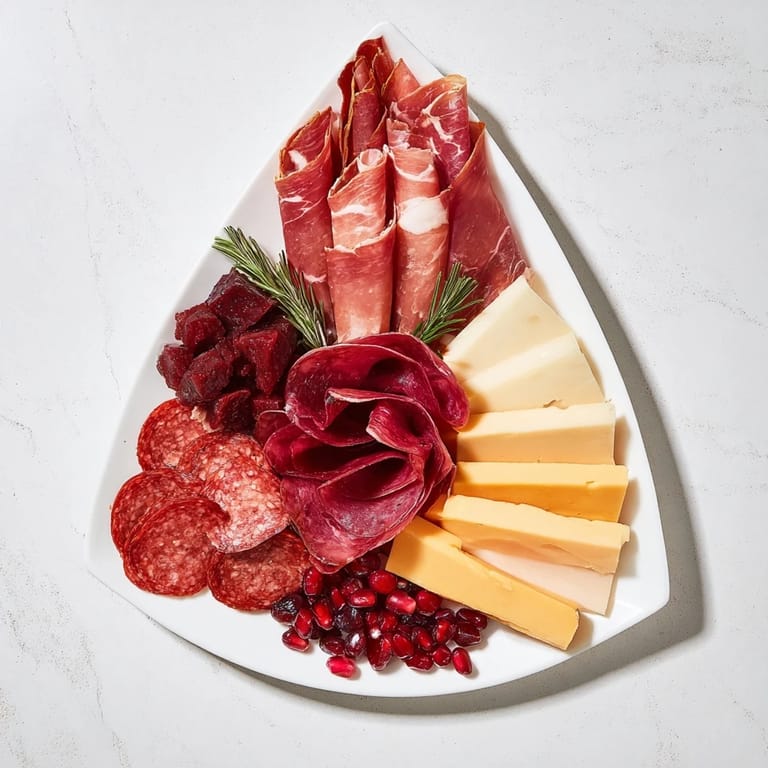
- Start with a clean, triangular board or platter—the shape matters because it guides your eye and creates natural sections. I like setting mine on a small cloth to keep it from sliding and to add texture.
- Arrange the meats with intention:
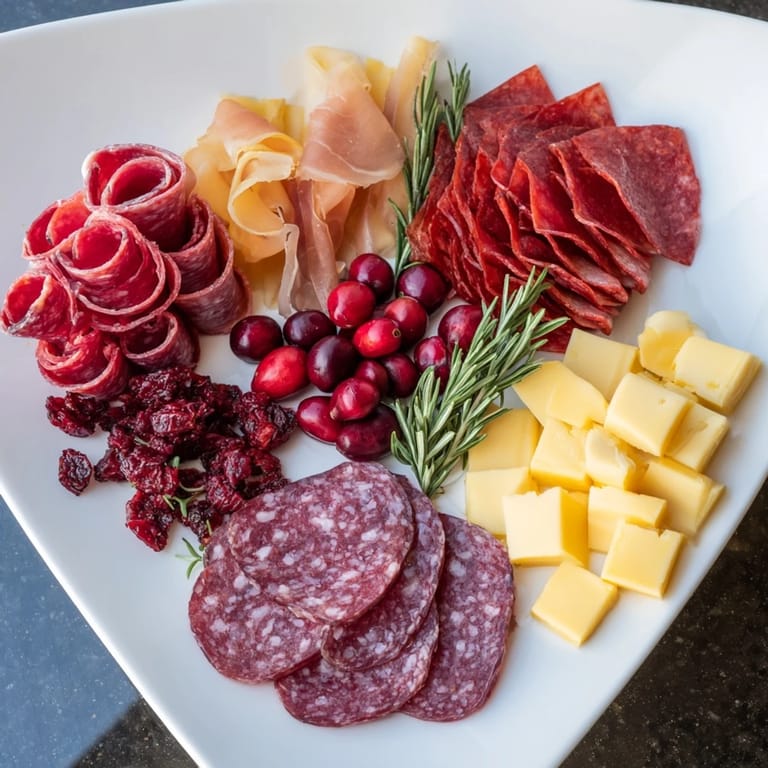
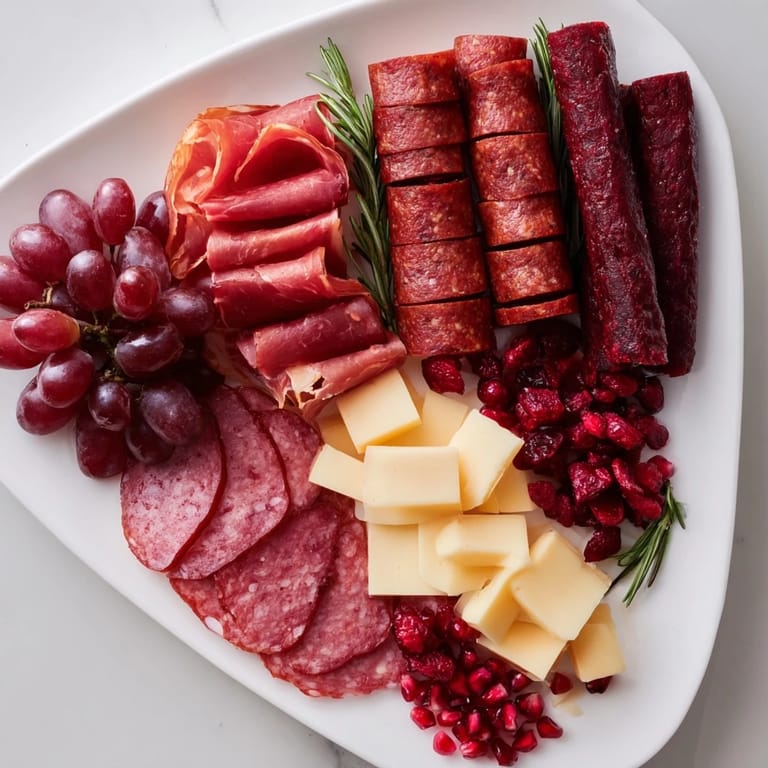
- Fold each meat distinctly—prosciutto drapes in loose folds, bresaola rolls into small bundles, chorizo leans in thin shingles, salami stands upright in stacks. Keep textures together so guests understand the variety without confusion.
- Position the wine-soaked cheeses as anchors:
- These are your stars, so give them space and clusters rather than scattering them. Fan the Drunken Goat, cube the Red Wine Cheddar into generous pieces, and slice the Merlot BellaVitano thickly so its complexity shows.
- Scatter fruits and vegetables with rhythm:
- Don't dot everything evenly across the board. Instead, create pockets of flavor—grapes clustered near salty meats, pomegranate seeds alongside cheese, peppers in corners where they catch light.
- Fill negative space with breads and crackers:
- This is where composition matters. Arrange baguette slices in overlapping rows and use beet crackers to create visual variation and to offer different vehicles for tasting.
- Finish with fragrance and theater:
- Tuck rosemary sprigs into gaps and scatter rose petals across the board just before serving. These final touches signal that this is something special, not just an afterthought appetizer.
- Serve at room temperature:
- Cold cheeses are muted cheeses, so let the board sit out for 15 minutes before guests arrive. The flavors will bloom and the textures will soften into their best selves.
 Save to Pinterest
 This board stopped being just appetizer when someone asked me the story behind the wine-soaked cheeses. Suddenly we weren't eating; we were tasting and talking and discovering. That's when I understood that a well-made charcuterie board isn't about showing off—it's about creating a moment where flavors and conversation matter equally.
The Psychology of Wine-Soaked Cheeses
Wine-soaked cheeses work magic because wine brings bitterness, tannins, and complexity that regular aged cheeses already possess—then amplifies them. The Drunken Goat becomes less sweet and more sophisticated, the Merlot BellaVitano develops layers you'd miss in its plain form, and the Red Wine Cheddar stops being just sharp and becomes dimensional. When you're building a single-color board, these wine-forward cheeses become your narrative thread, connecting everything from the cured meats to the pomegranate through a cohesive flavor story.
Building Flavor Harmony on a Board
The secret I've learned is this: a great charcuterie board isn't about abundance, it's about conversation between flavors. The salty intensity of bresaola needs the bright pop of pomegranate seeds nearby, not buried three inches away. The smoke in the salami wants to dance with the earthiness of roasted peppers, and the tartness of dried cranberries should be positioned where they can bridge from cheese to meat to vegetable. Think of it like a musical composition where every placement creates a chord rather than random notes.
Presentation That Tells a Story
What transforms a charcuterie board from casual snack to conversation piece is constraint through color. By committing to The Crimson Crest's burgundy, wine-red, and rose palette, you create visual coherence that makes guests pause and actually notice what you've built. This isn't complexity for its own sake; it's clarity achieved through intention. Every element—from the beet crackers to the rose petals—reinforces the same sophisticated, wine-forward narrative.
- If guests ask about substitutions, the easiest swap is aged Manchego rubbed with smoked paprika, which mimics both the color and the wine-forward flavor profile.
- Set the board out 30 minutes before serving; this allows cheeses to reach room temperature and allows flavors to express themselves fully.
- Pair with a Cabernet Sauvignon or Malbec, but don't be afraid to let the board shine on its own—it's designed to anchor the wine experience, not bow to it.
 Save to Pinterest
 The Crimson Crest is proof that restraint creates elegance. This board doesn't need a hundred elements to impress; it needs intention and flavors that know how to talk to each other. Make it once and you'll understand why it becomes a go-to for every gathering that asks for something a little more thoughtful than ordinary.
Common Recipe Questions
- → What types of meats are featured on the Crimson Crest board?
The board features prosciutto, bresaola, spicy chorizo, and smoked beef salami, each folded or rolled for texture.
- → Which cheeses are soaked in red wine for this board?
The cheeses include Drunken Goat, Red Wine Cheddar, and Merlot BellaVitano, each infused with red wine for rich flavors.
- → How should the board be served for optimal taste?
It is best served immediately at room temperature to highlight the aroma and texture of meats, cheeses, and accompaniments.
- → What accompaniments enhance the flavor profile?
Fresh red grapes, pomegranate seeds, dried cranberries, roasted red peppers, and red onion jam add sweetness, tartness, and depth.
- → Are there any recommended garnishes for presentation?
Fresh rosemary sprigs and edible rose petals provide aromatic and visual enhancements to the board.
- → Can this board accommodate dietary restrictions?
Substitute gluten-free crackers and check ingredients for allergens like dairy or sulfites to accommodate most dietary needs.