 Save to Pinterest
 I stumbled into this curry on a rainy Wednesday when my fridge was a chaotic rainbow of half-used vegetables. No plan, just a can of coconut milk and a hunch that everything would taste better simmered together. The kitchen filled with ginger and garlic, and suddenly that thrown-together dinner felt like something I'd want to make again and again. It's become my go-to whenever I need comfort in a bowl without much fuss.
The first time I made this for friends, I panicked halfway through because I thought I'd added too much curry paste. But everyone went quiet after the first bite, then asked for seconds. One friend still texts me asking for the recipe every few months. It's funny how a dish born from near-panic became the one people remember most fondly.
Ingredients
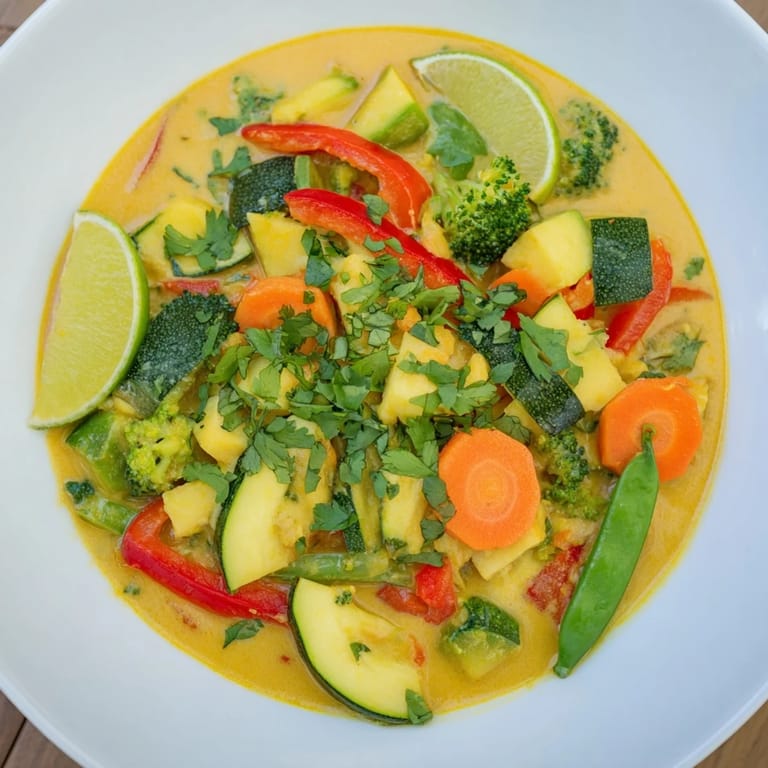
- Red bell pepper: Adds sweetness and a pop of color that keeps the curry from looking dull, slice it evenly so it cooks at the same rate as everything else.
- Carrot: Brings a subtle earthiness and holds its shape beautifully in the simmer, I cut mine on the bias for a bit of elegance.
- Zucchini: Soaks up the curry flavors like a sponge, just don't dice it too small or it'll turn mushy.
- Broccoli: The florets catch pockets of sauce and add a satisfying bite, I always leave them a little crisp.
- Snap peas: These go in last to keep their bright green crunch, they're the pop of freshness in every spoonful.
- Red onion: Softens into sweetness and forms the aromatic base, yellow onion works too but red looks prettier.
- Coconut oil: Its subtle flavor supports the coconut milk without fighting it, and it doesn't smoke at medium heat.
- Garlic: Minced fine so it melts into the sauce and perfumes everything, I always use fresh.
- Fresh ginger: Grated ginger gives warmth and a little zing that dried just can't match, peel it with a spoon to save your fingers.
- Red curry paste: This is the flavor engine, check the label if you need it vegan because some sneak in shrimp paste.
- Ground turmeric: Adds golden color and a gentle earthiness, it stains everything so wipe spills fast.
- Ground cumin: Brings depth and a toasty note that balances the sweetness of coconut.
- Ground coriander: Its citrusy undertone brightens the whole pot, I love the way it smells when it hits the heat.
- Coconut milk: Full fat makes it creamy and luscious, light versions just don't have the same body.
- Vegetable broth: Loosens the sauce so it coats instead of clumps, homemade or store-bought both work fine.
- Soy sauce or tamari: A splash adds salty umami that deepens every other flavor, tamari keeps it gluten-free.
- Fresh lime juice: Brightened the whole dish at the end, bottled lime juice tastes flat in comparison.
- Fresh cilantro: Some people love it, some hate it, but I think it finishes the curry with a burst of green freshness.
- Lime wedges: A squeeze at the table lets everyone adjust brightness to their taste.
Tired of Takeout? 🥡
Get 10 meals you can make faster than delivery arrives. Seriously.
One email. No spam. Unsubscribe anytime.
Instructions
- Soften the onion:
- Warm the coconut oil over medium heat until it shimmers, then add the red onion and stir until it turns translucent and smells sweet. This takes about two to three minutes and sets the aromatic foundation for everything that follows.
- Wake up the aromatics:
- Toss in the garlic and ginger, stirring constantly so they don't stick or burn. After about a minute, your kitchen will smell incredible and you'll know they're ready.
- Bloom the spices:
- Stir in the curry paste, turmeric, cumin, and coriander, cooking for a full minute while stirring. This step releases their oils and deepens their flavor, turning the paste from raw to fragrant.
- Add the hearty vegetables:
- Toss in the bell pepper, carrot, zucchini, and broccoli, stirring frequently for three to four minutes. They'll start to soften just a bit and soak up all those toasted spices.
- Build the sauce:
- Pour in the coconut milk and vegetable broth, then bring everything to a gentle simmer. Don't rush this, a slow bubble is better than a rolling boil.
- Finish with snap peas:
- Add the snap peas and soy sauce, stir well, then cover and let it simmer for ten to twelve minutes. The vegetables should be tender but still have some life, not mushy.
- Brighten and season:
- Pull the pot off the heat and stir in the lime juice, then taste and adjust with salt and pepper. This final hit of acid makes everything sing.
- Serve and garnish:
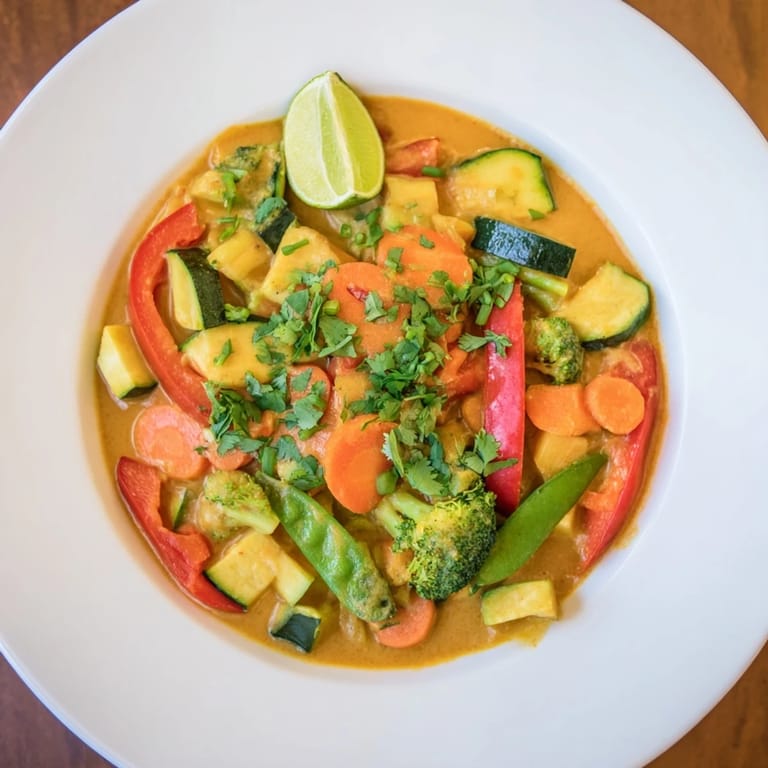
- Ladle into bowls, scatter cilantro on top, and add lime wedges on the side. I love this over jasmine rice, but it's also great with quinoa or even crusty bread.
 Save to Pinterest
 One evening I made this and ate it straight from the pot, standing at the stove with a wooden spoon, because it smelled too good to wait for a bowl. My partner walked in, grabbed another spoon, and we just stood there together in the warm kitchen, tasting and adjusting lime until it was perfect. That's when I realized this recipe isn't just about feeding yourself, it's about those little stolen moments that feel like home.
Variations You Can Try
Sometimes I throw in a handful of chickpeas or cubed tofu for extra protein, and it turns the curry into a full one-bowl meal. Cauliflower and green beans work beautifully if you want to swap out any of the vegetables, and I've even added mushrooms when I had them on hand. The beauty of this recipe is its flexibility, it adapts to whatever your fridge is offering.
Storage and Reheating
Leftovers keep in the fridge for up to four days and somehow taste even better the next day after the flavors meld overnight. Reheat gently on the stove with a splash of broth or water to loosen the sauce, microwaving works too but stir halfway through so it heats evenly. I've never tried freezing it because it never lasts that long, but I imagine the vegetables would soften more upon thawing.
Serving Suggestions
I almost always serve this with jasmine rice because the floral aroma complements the curry beautifully, but quinoa makes it heartier and adds a nutty note. Sometimes I'll warm up naan or pita on the side for scooping, and a simple cucumber salad with rice vinegar cuts through the richness perfectly.
- A cold beer or a crisp white wine balances the spice and creaminess.
- Top with crushed peanuts or cashews for added crunch and richness.
- A dollop of coconut yogurt on top makes it even more indulgent.
 Save to Pinterest
 This curry has saved more weeknights than I can count, and every time I make it I'm reminded that the best recipes are the ones you can return to without thinking too hard. I hope it brings you as much warmth and ease as it's brought me.
Common Recipe Questions
- → Can I use other vegetables in this dish?
Yes, cauliflower, green beans, mushrooms, or any preferred veggies work well. Adjust cooking times as needed to keep them tender-crisp.
- → How can I make this dish spicier or milder?
Adjust the amount of red curry paste according to your heat preference or choose a milder curry paste variety.
- → What can I substitute for soy sauce if allergic?
Coconut aminos provide a great soy-free alternative with a similar umami flavor.
- → How do I ensure the curry paste is vegan and gluten-free?
Check labels carefully, as some brands may contain shrimp paste or gluten. Look for certified vegan and gluten-free options.
- → Can I add protein to this dish?
Chickpeas or tofu can be added during simmering for extra protein without altering flavors significantly.